Wire Clips
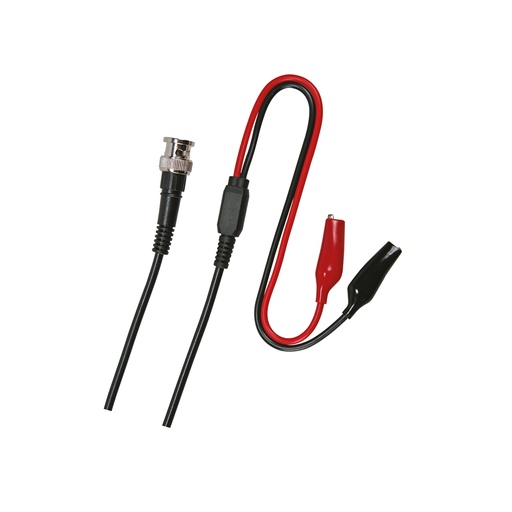
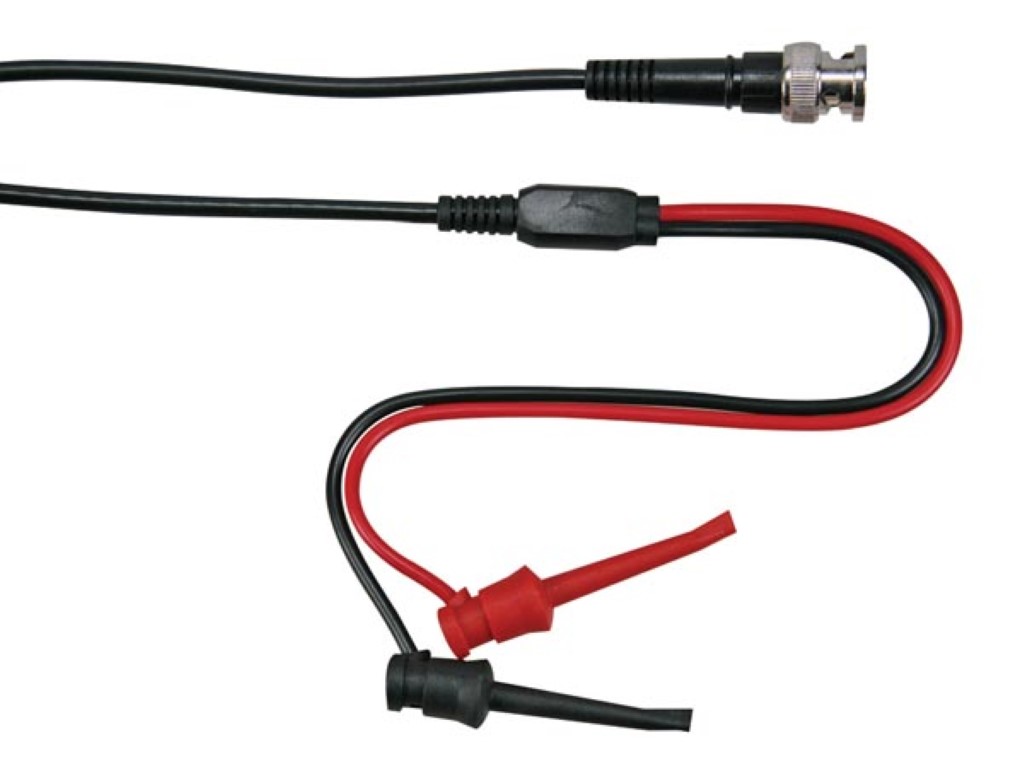
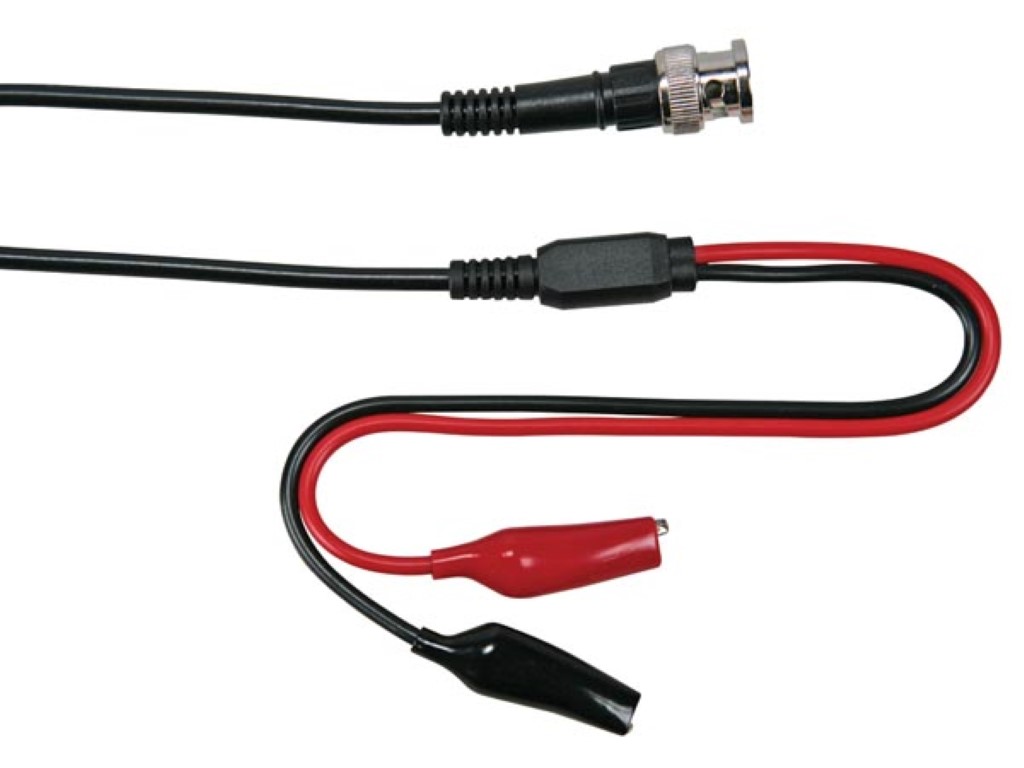
Attach a BNC-equipped instrument to an accessible test point with a ready-made clip lead. Choose a 1 m cable ending in two crocodile clips or two miniature hook clips. These assemblies combine the cable and contacts, making them different from loose clips used to build your own test lead.
Choose how the clip grips
Crocodile clips suit accessible contact points that their jaws can hold. Miniature hook clips offer a different grip for smaller connection points. Check the space around the conductor, the BNC connection on your instrument and the lead's reach before choosing.
Compare each assembly's voltage and current limits with your intended use. Keep the two contacts separated to avoid bridging nearby conductors. A BNC fitting alone does not establish suitability for every oscilloscope measurement or circuit voltage; the complete cable and instrument limits determine the setup.
Frequently asked questions
Should I choose crocodile clips or miniature hooks?
Crocodile clips grip larger accessible contacts, while miniature hooks are useful for small component leads and confined test points. Choose the contact style that stays secure without touching adjacent conductors, then match the cable connection to your instrument.
What are BNC-to-clip leads used for?
They connect a compatible BNC instrument connection to accessible circuit contacts. They are useful for appropriate bench measurements and signal connections. They do not automatically offer the attenuation, compensation or measurement ratings of a dedicated oscilloscope probe.
Does a BNC-to-clip lead have two independent signal channels?
No. A normal coaxial BNC lead has a centre conductor and an outer shield, brought out to separate contacts. They belong to one connection. On grounded instruments the shield may be earth-referenced; establish the grounding arrangement before connection.
Can I leave clips connected during a measurement?
Clips are useful for keeping a suitable test point connected while observing readings. Attach and route them so they cannot slip, pull free or bridge contacts. Respect the instrument’s grounding and electrical limits throughout the measurement.
Which details should I compare before buying clip leads?
Compare the instrument plug, clip or hook size, cable length and specified electrical limits. Small hooks suit fine contacts, while larger clips need more clearance. Do not select a lead solely because its BNC connector fits.