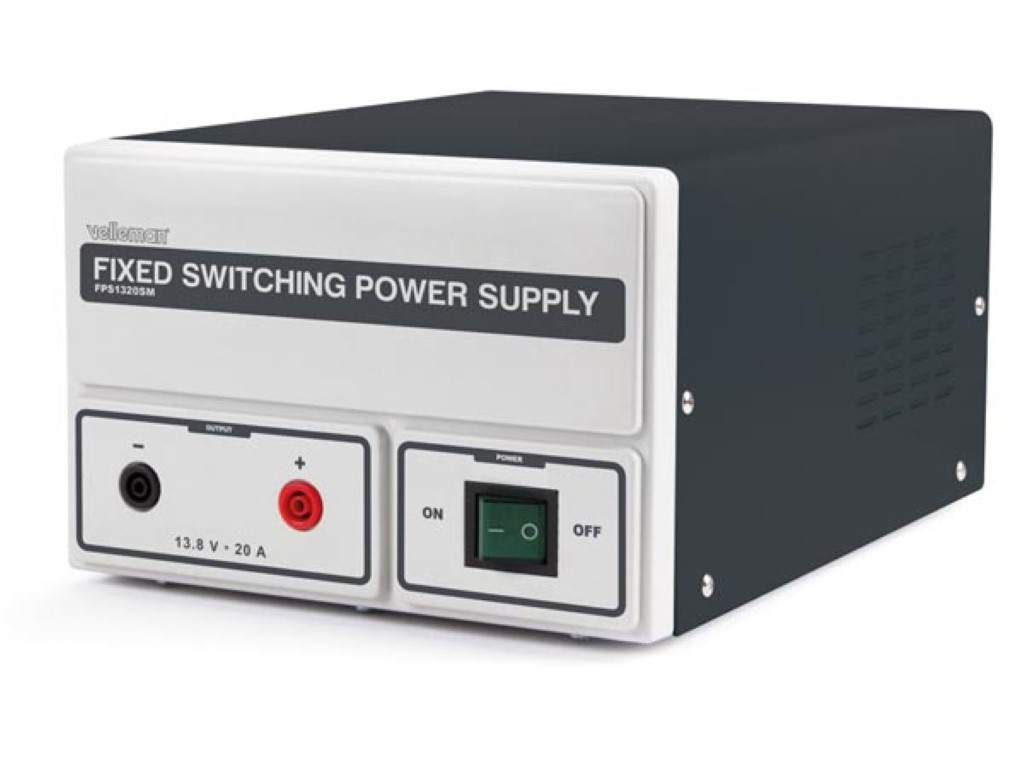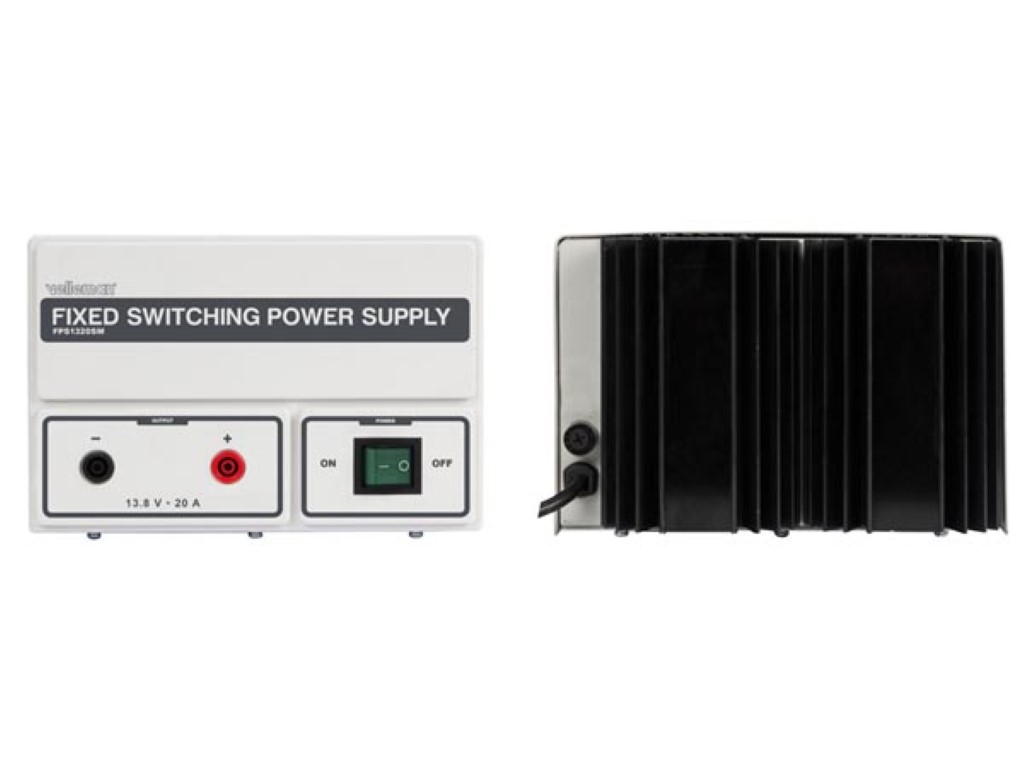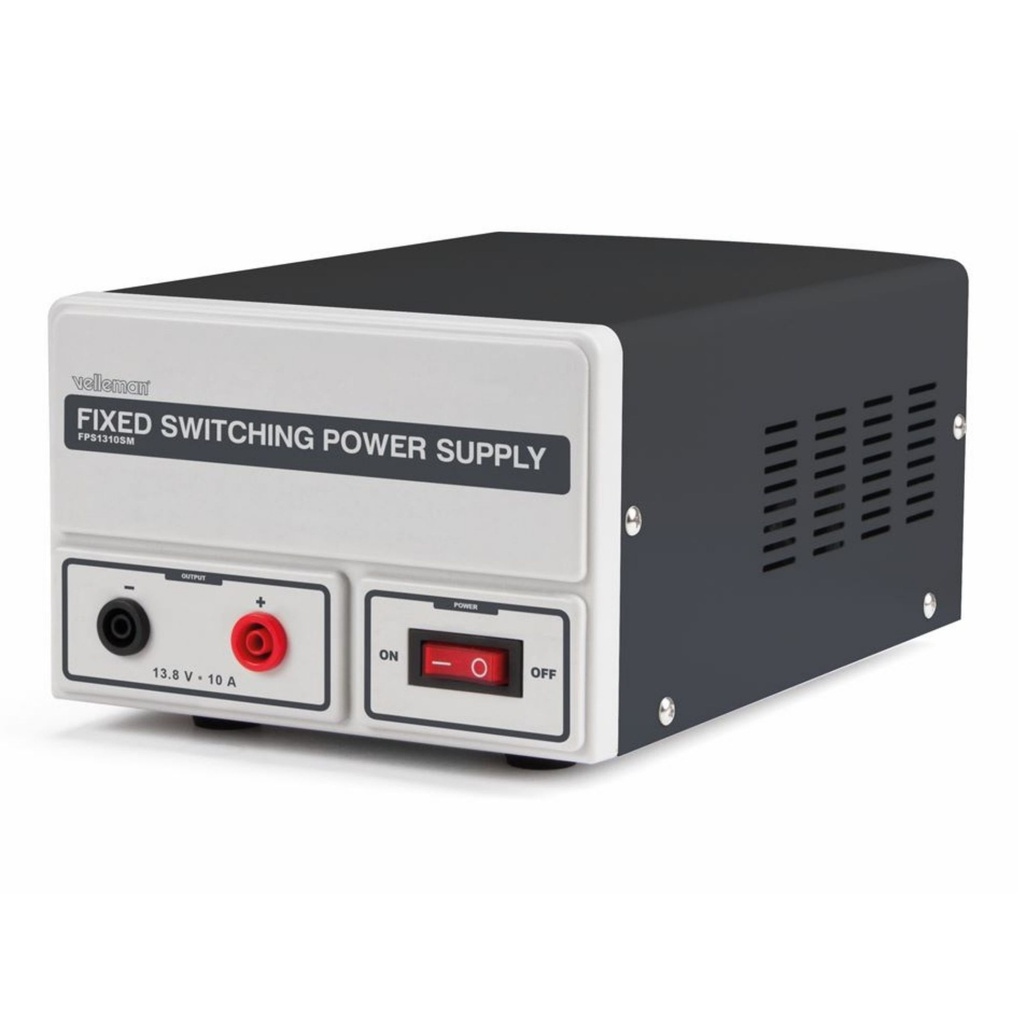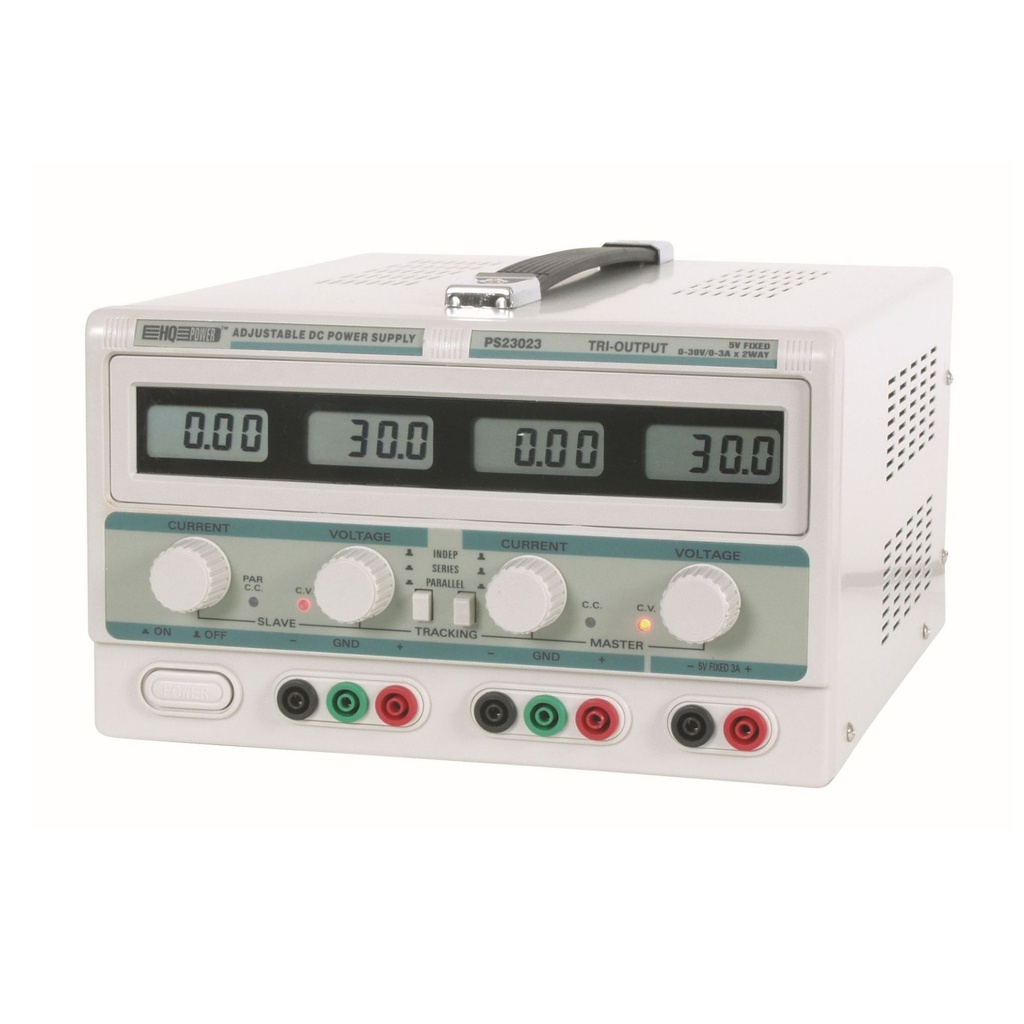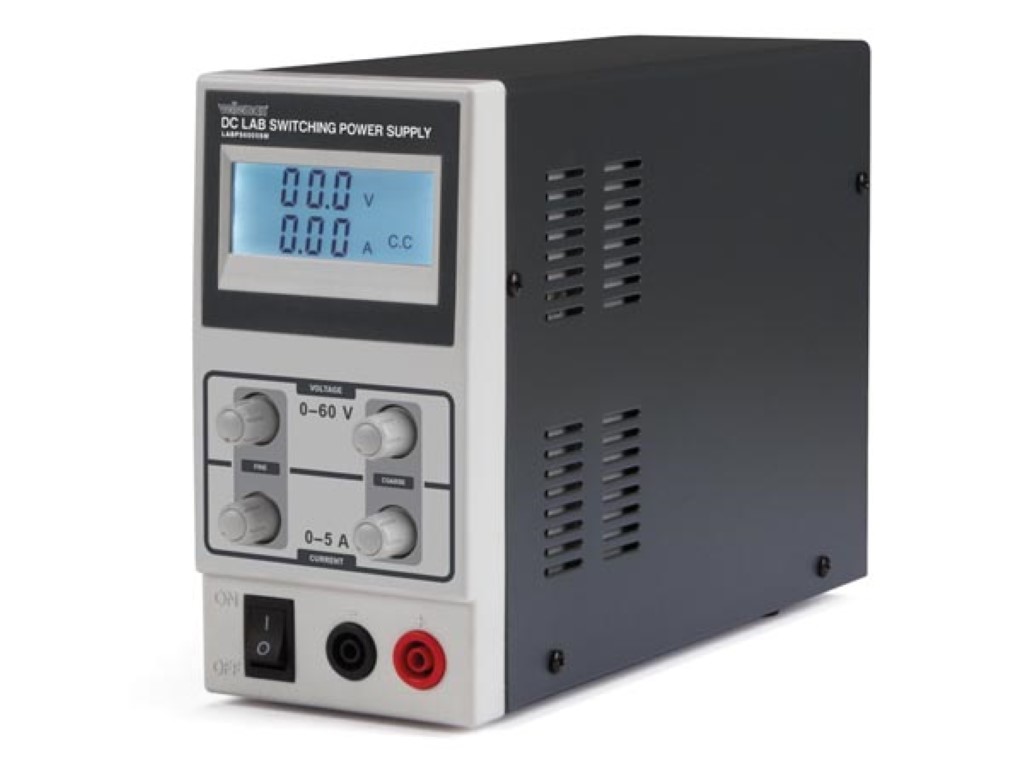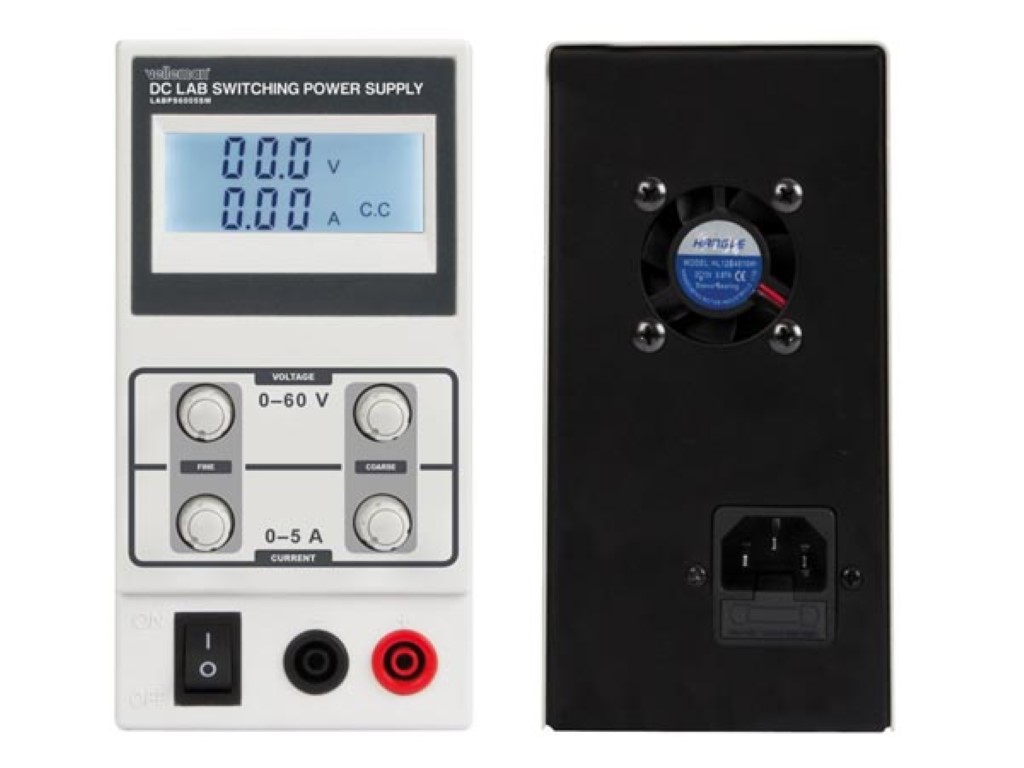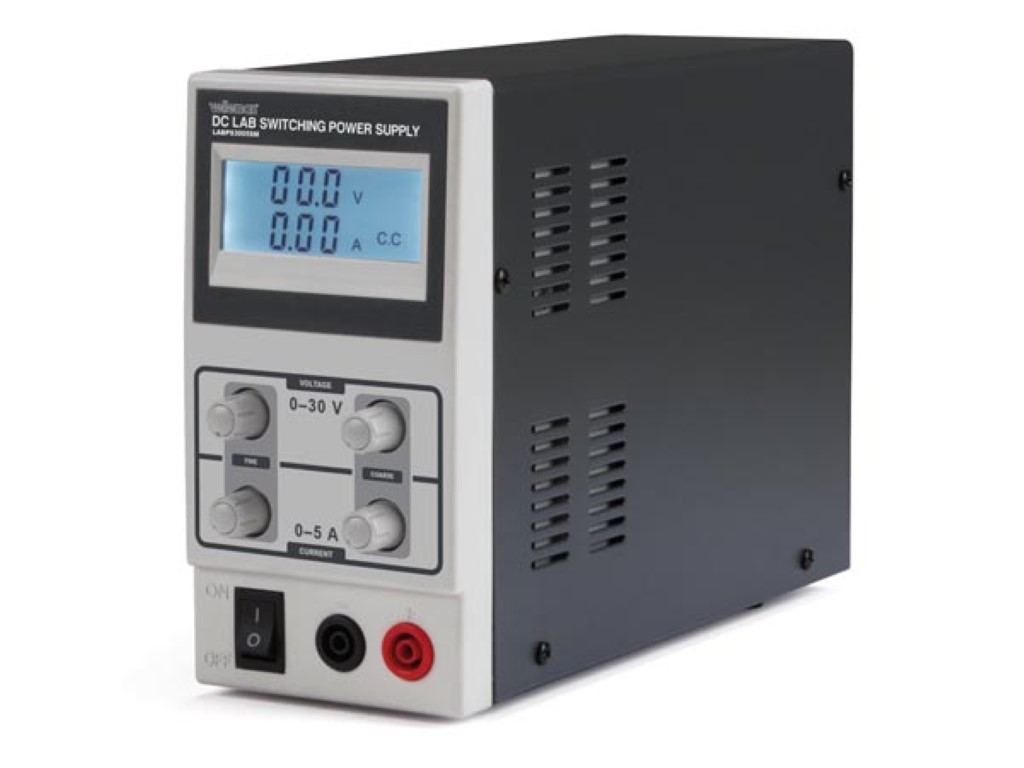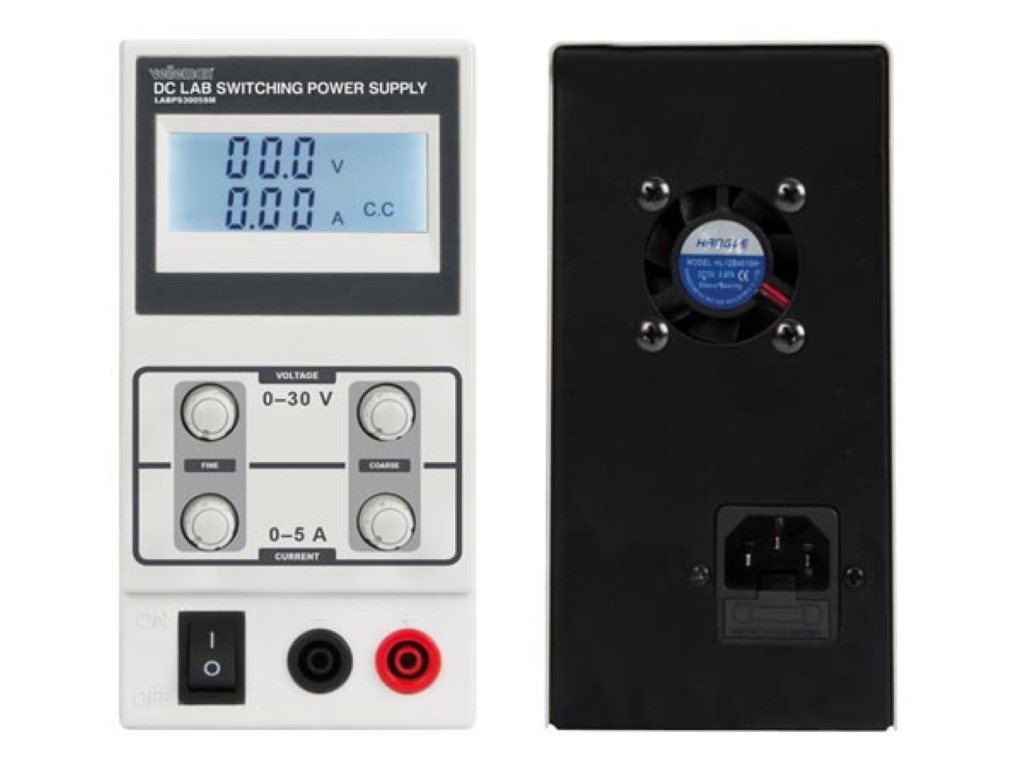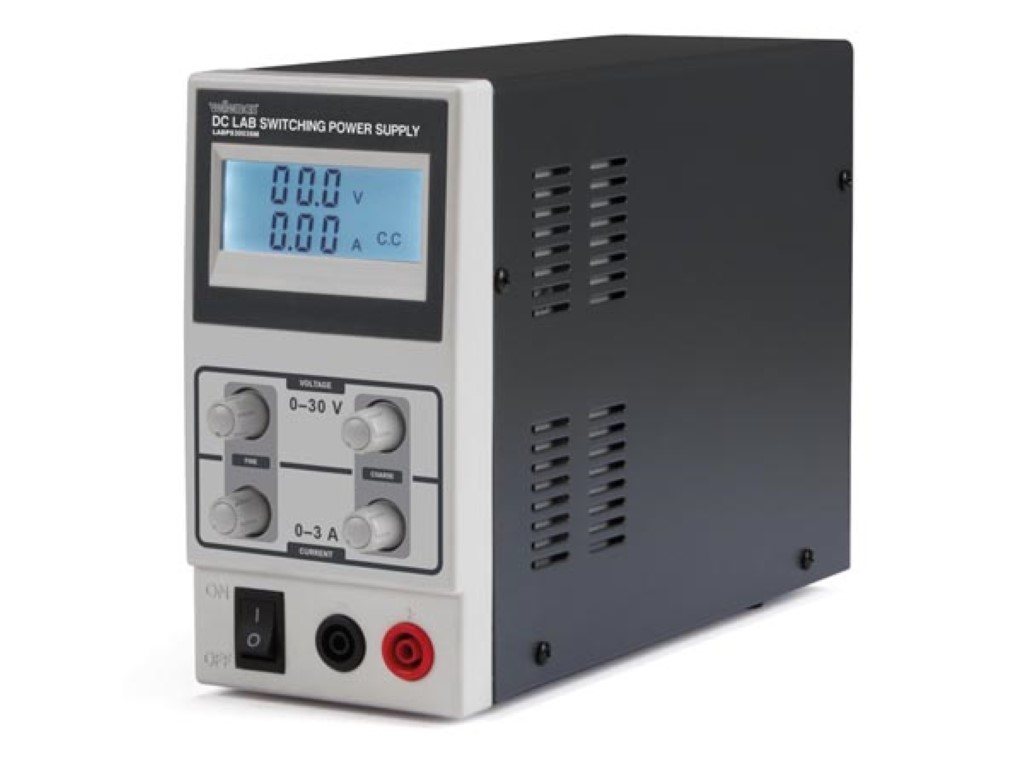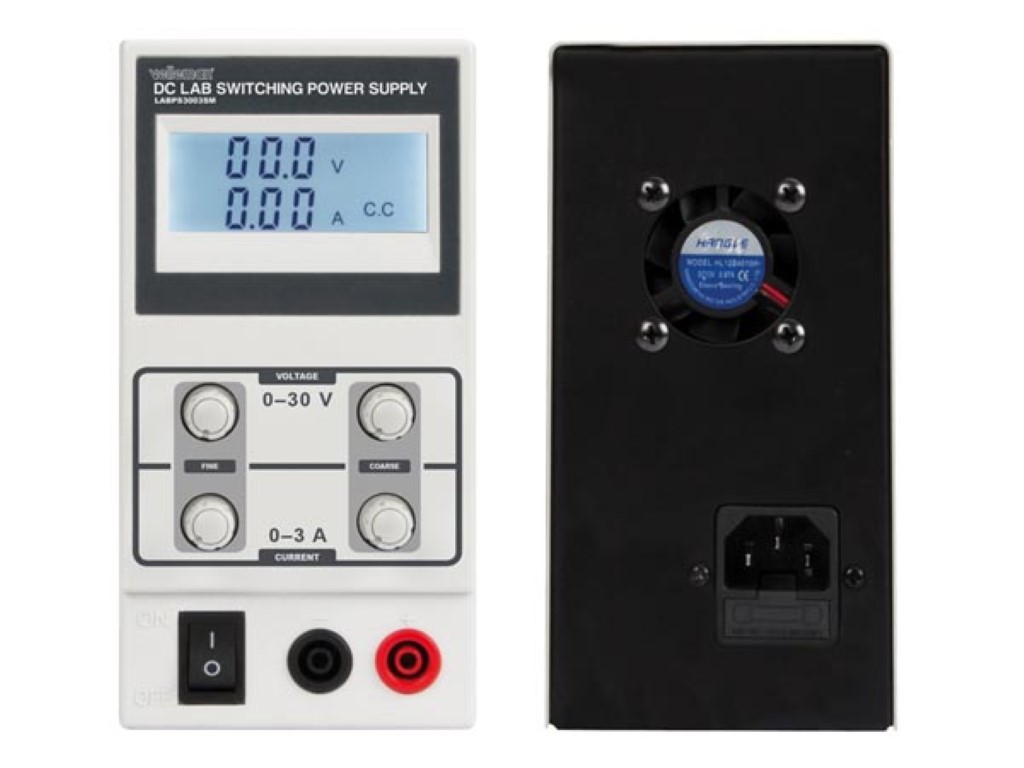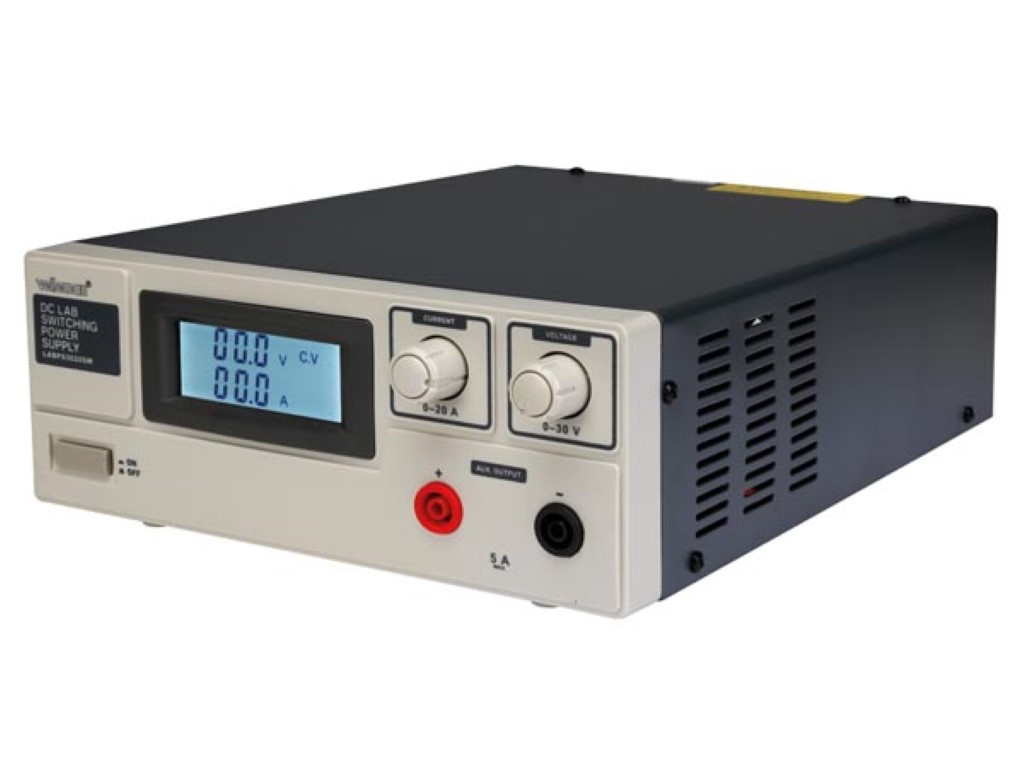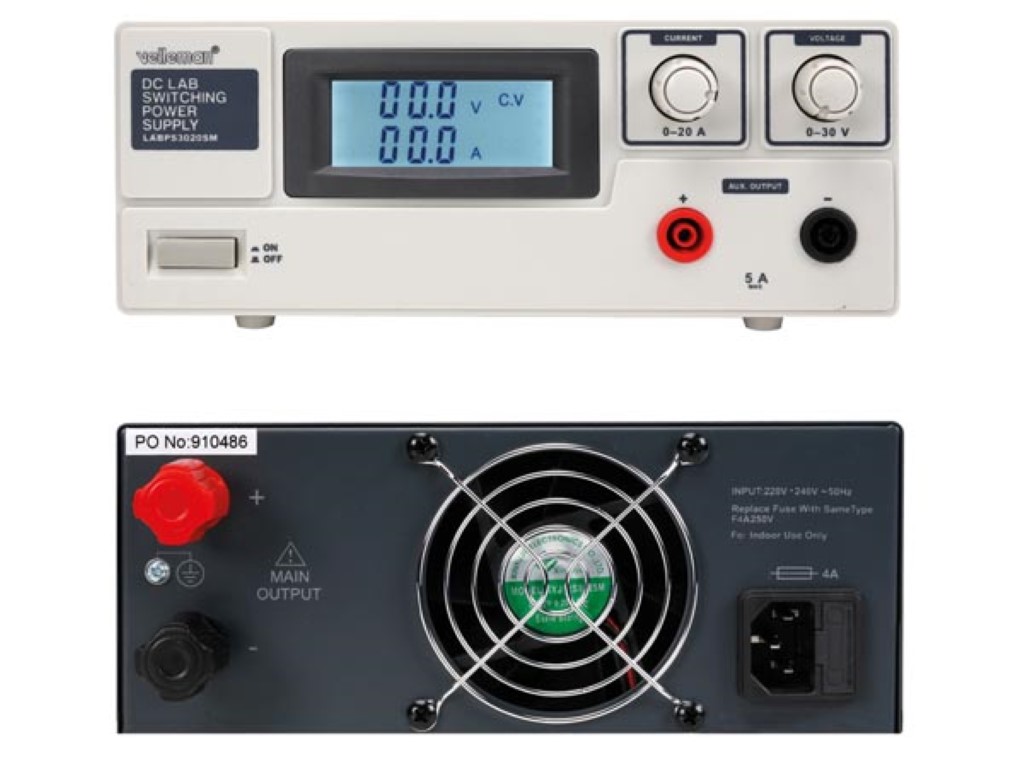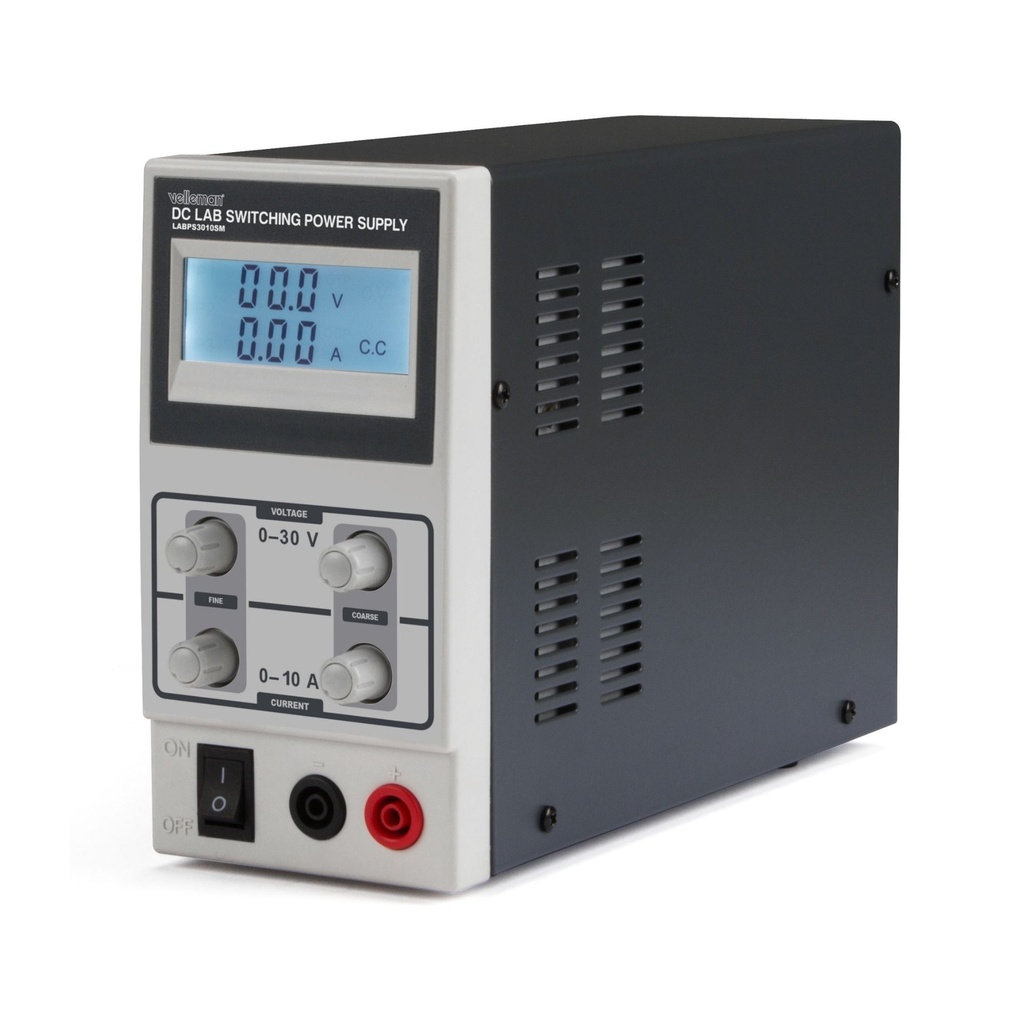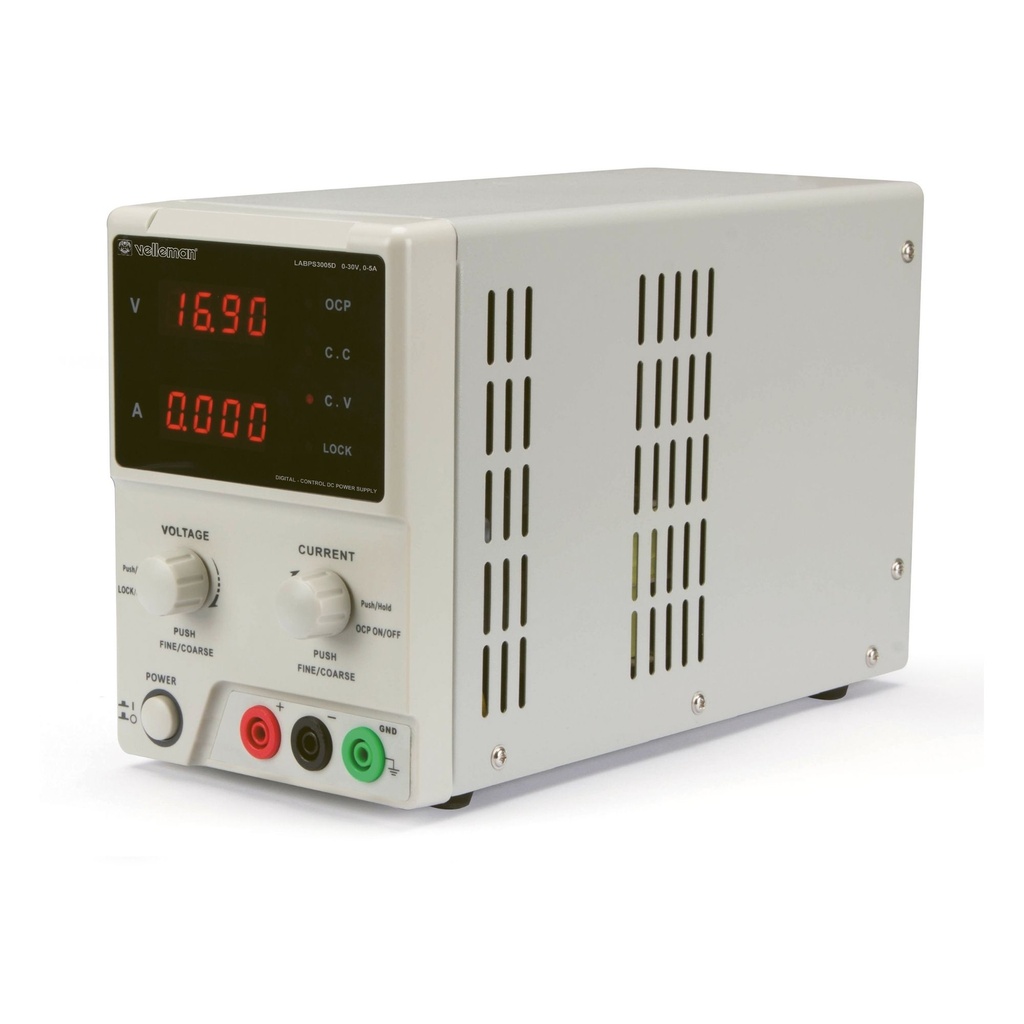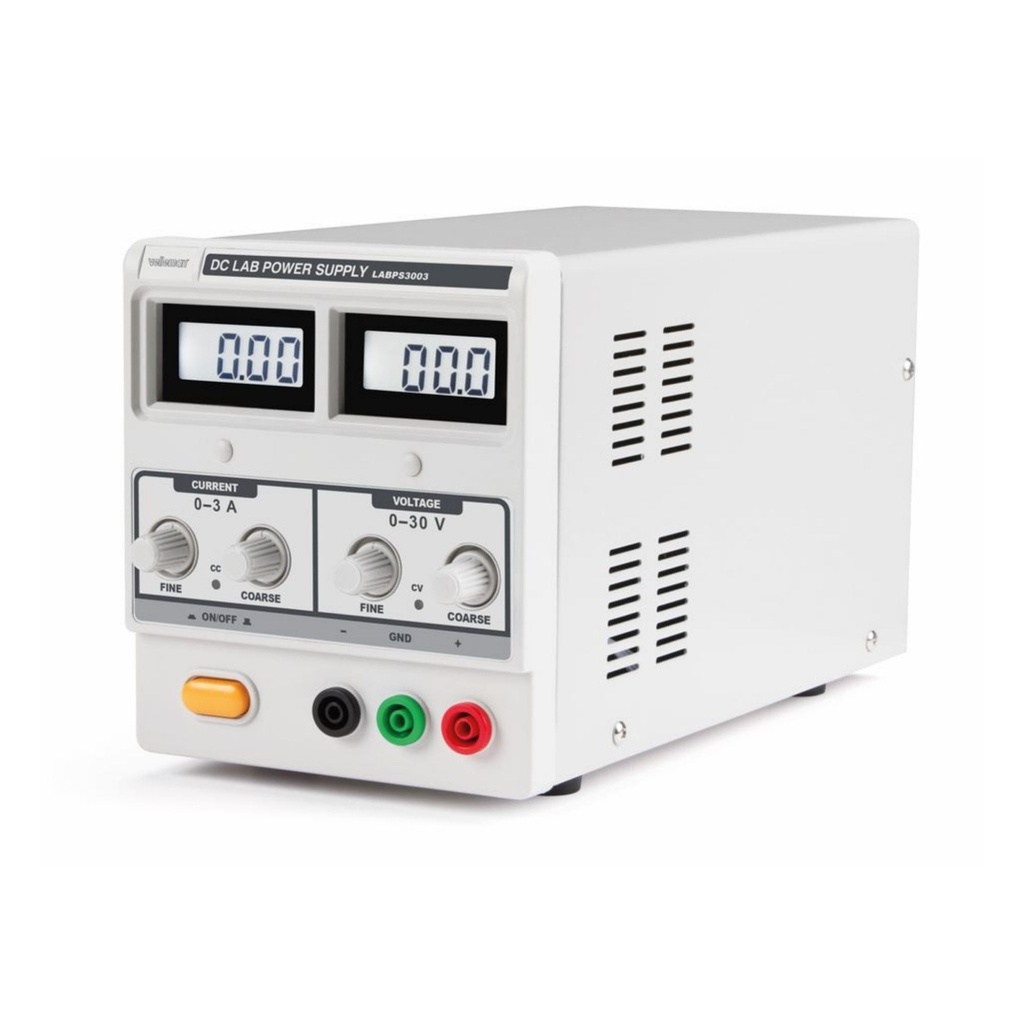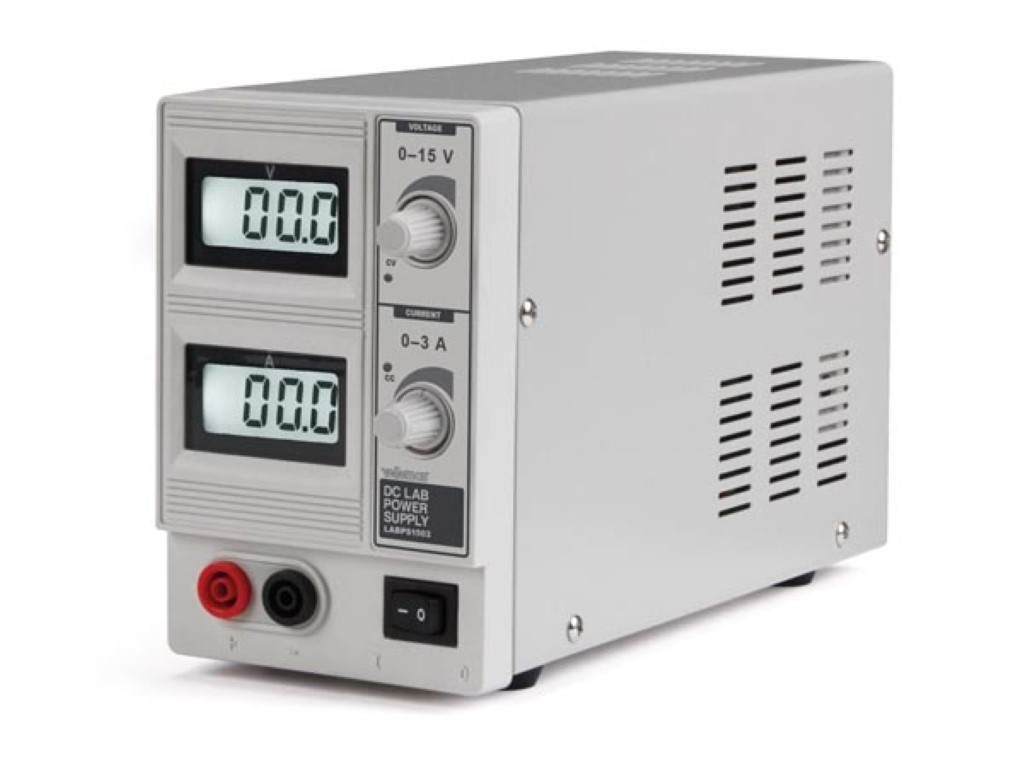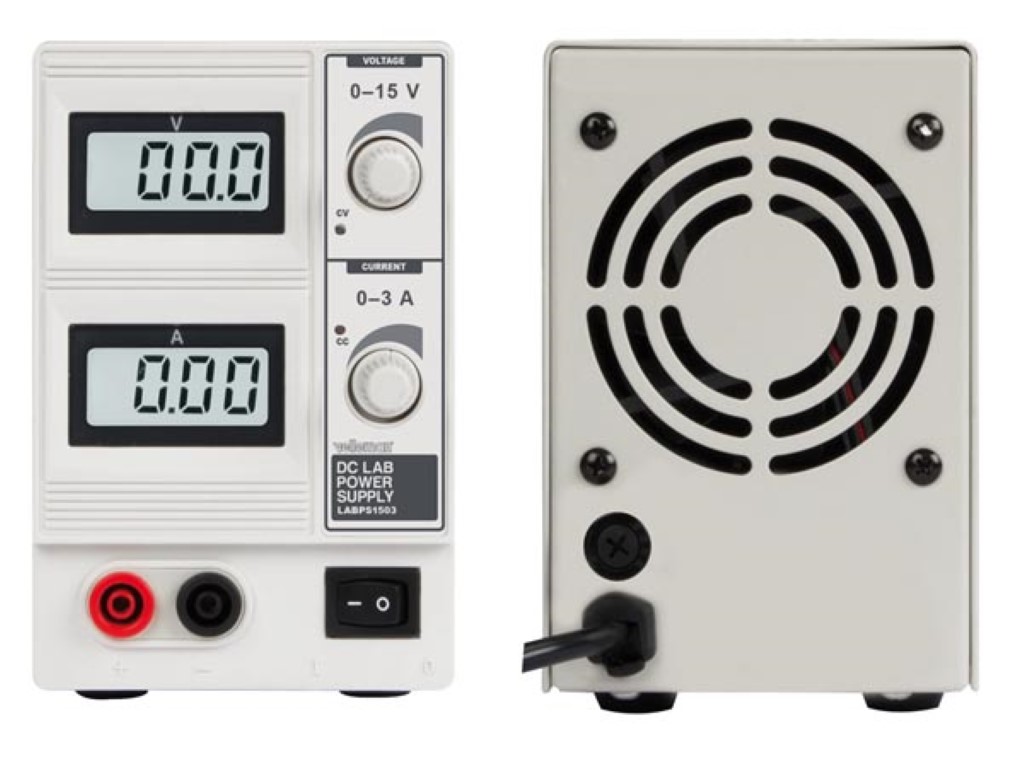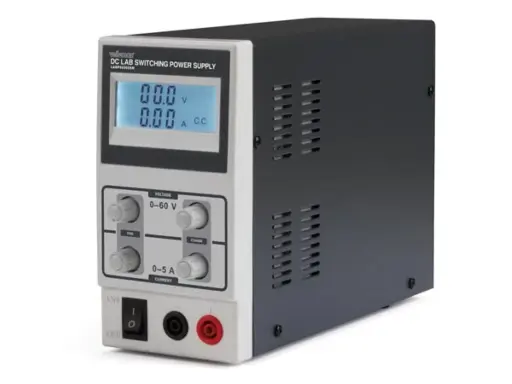
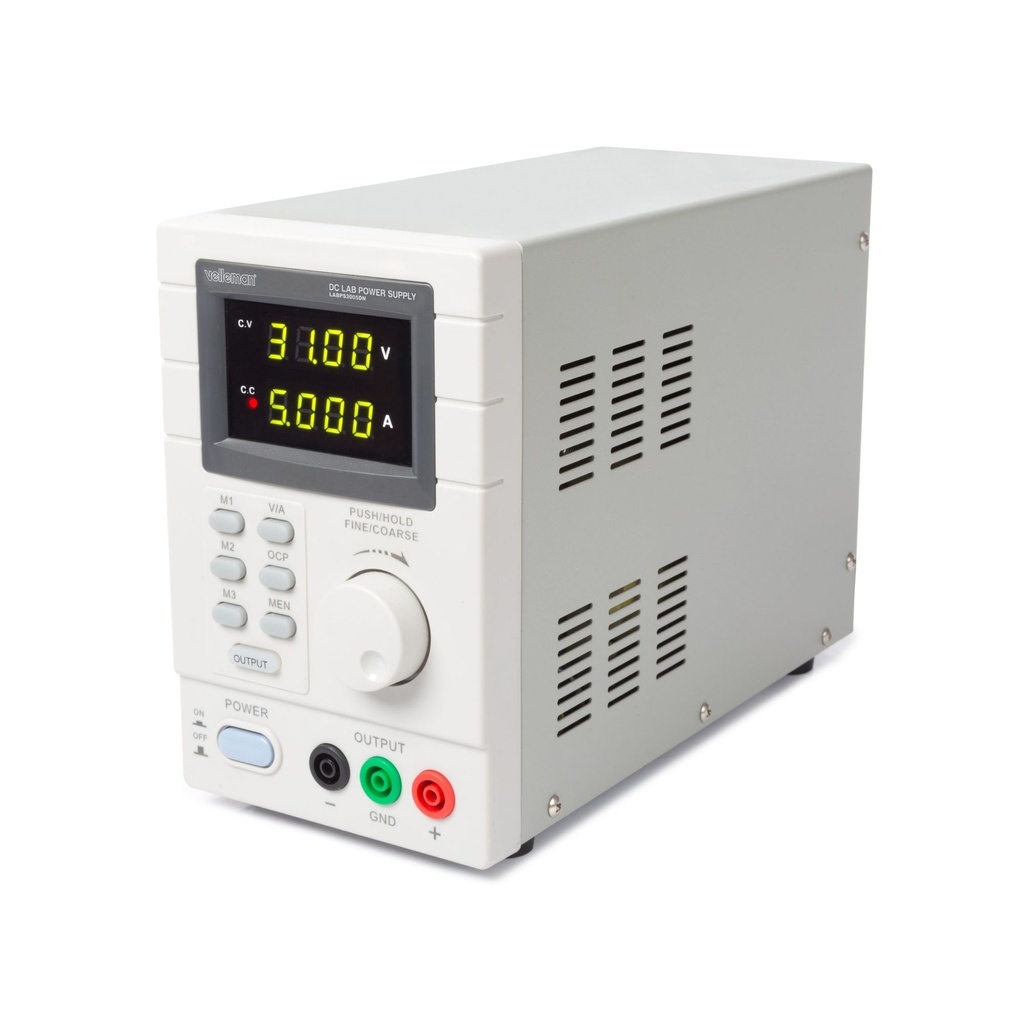

Power a prototype or test circuit with a laboratory power supply chosen for its output range and controls. This selection includes adjustable DC bench supplies, dual-output configurations, a USB-programmable model and fixed 13.8 V switching supplies, so you can match the source to the load.
Start with the voltage your circuit needs and the current it can draw. The range includes adjustable models up to 15, 30 or 60 V, with different current limits; the highest voltage and current figures belong to specific models. A dual supply can support a setup needing separate outputs. A fixed 13.8 V supply serves a different need from a variable bench source.
Check how voltage and current are set and displayed, the current-limiting functions and the stated output characteristics. Choose USB programming when computer control is part of the test. Read the manual for channel use and output settings before connecting the load. Check whether connection leads are included, and select leads and connectors with suitable ratings for the intended voltage and current.
Choose an output voltage range covering your circuit and a current rating sufficient for its demand. Allow for startup current where relevant. The supply's maximum current is its capacity, not a current forced into every circuit.
An adjustable supply lets you set the output for different circuits and experiments. A fixed-output supply provides a specified voltage. Choose fixed output for a known requirement and adjustable output for a versatile electronics bench.
In constant-voltage mode, the supply regulates voltage while the load determines current. When an adjustable current limit is reached, a suitable supply reduces its voltage to control current. This helps during circuit development and testing.
Multiple outputs are useful when a project needs separate supply rails or you want to power more than one circuit. Compare independent channel ratings; series, parallel and tracking operation are model-specific features.
Not necessarily. On a programmable lab supply, USB may be a computer-control interface. Check whether you need remote control or simply adjustable DC output, and choose the matching output connections and leads.