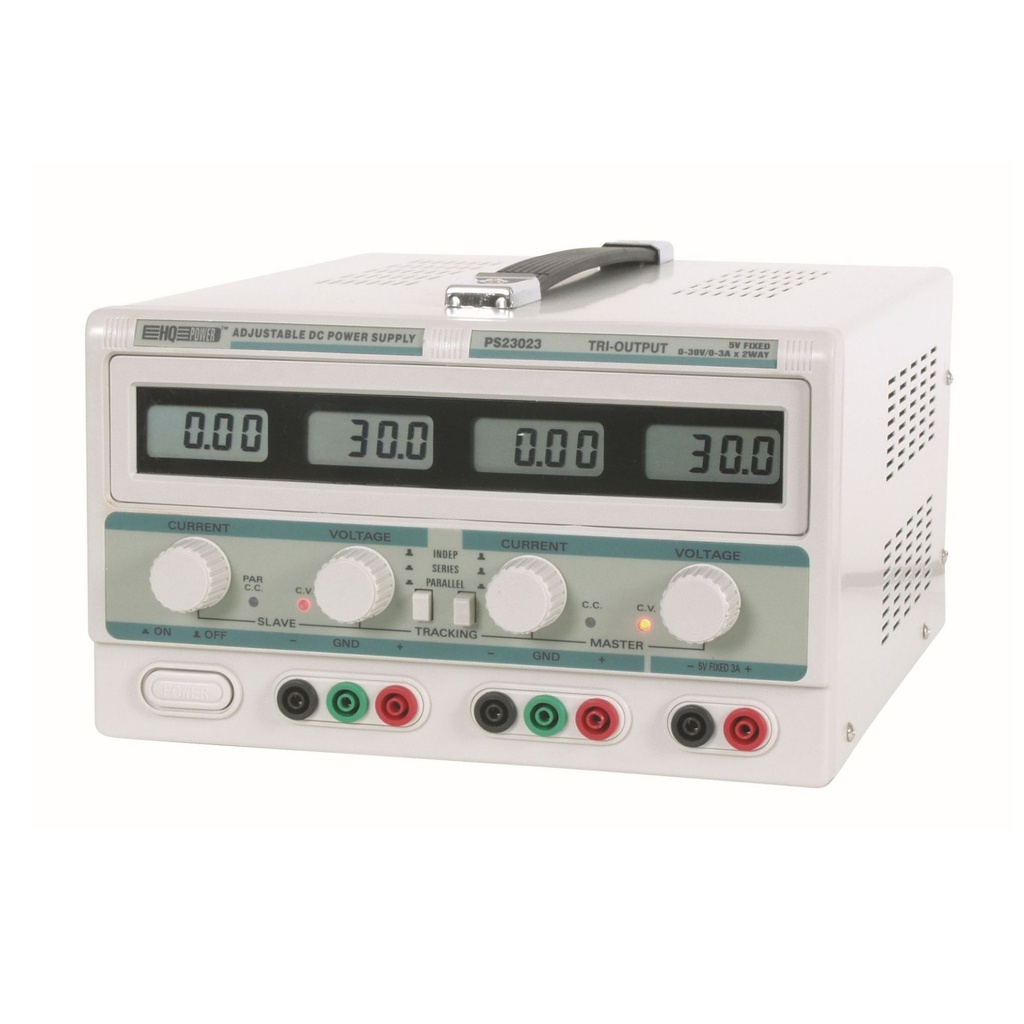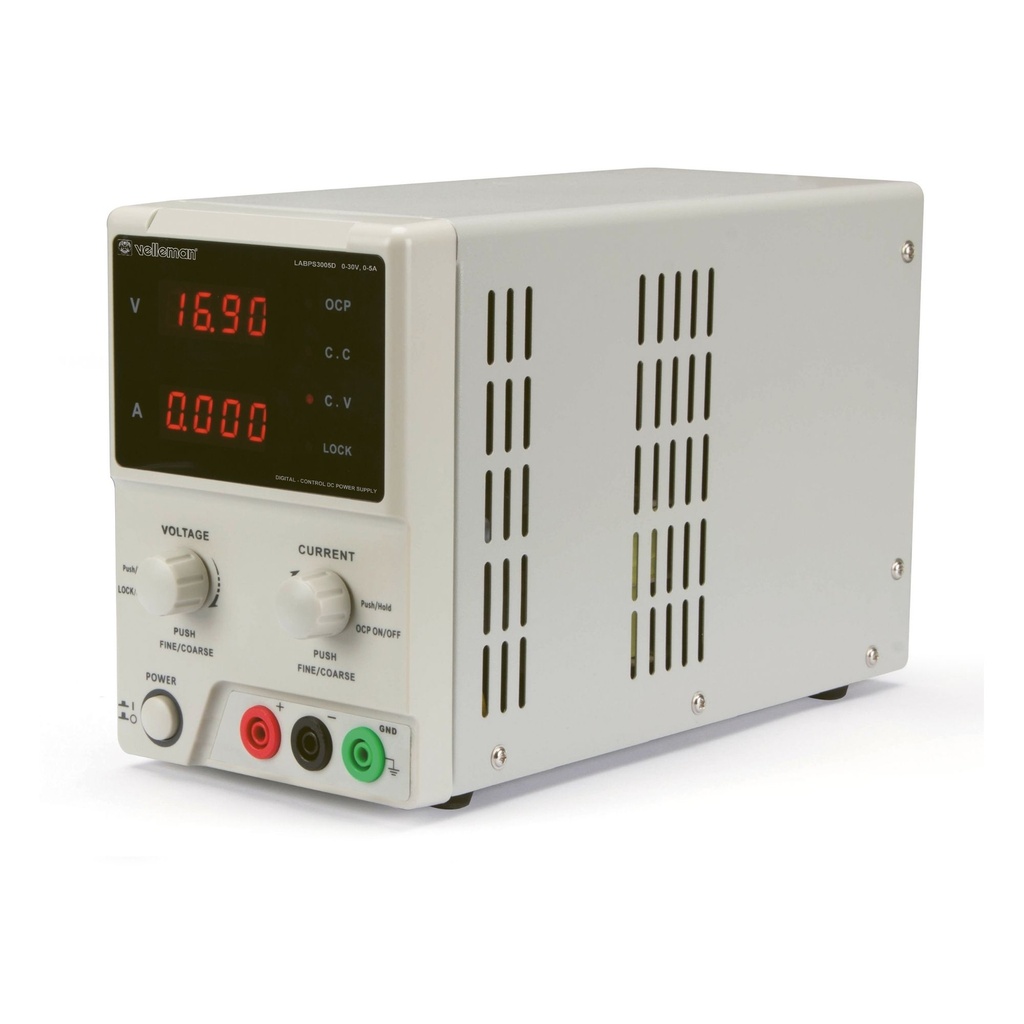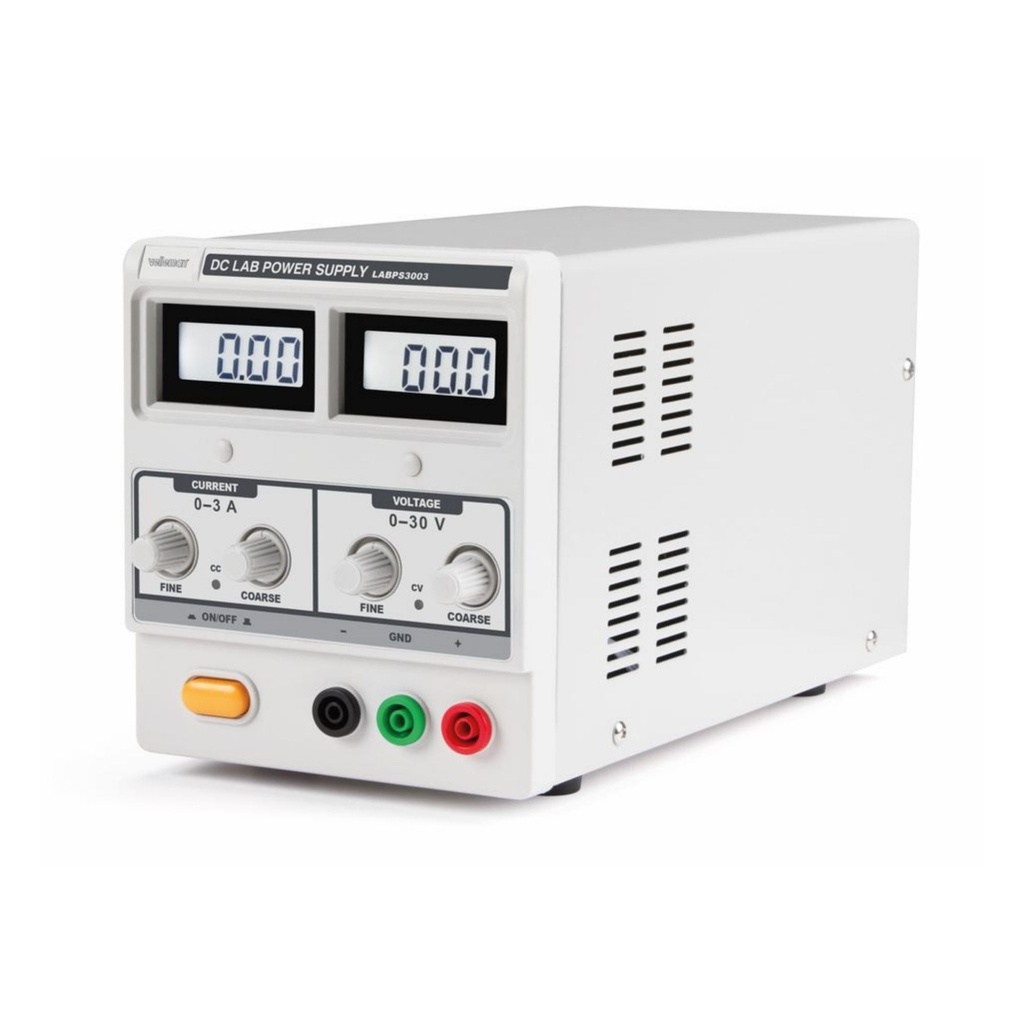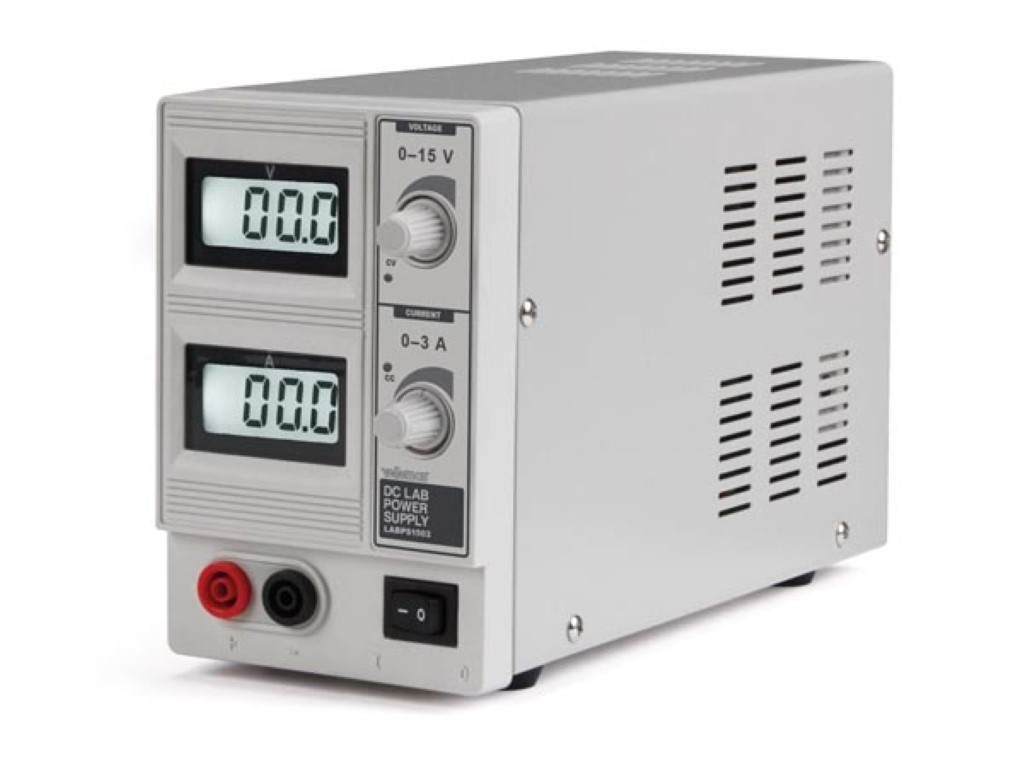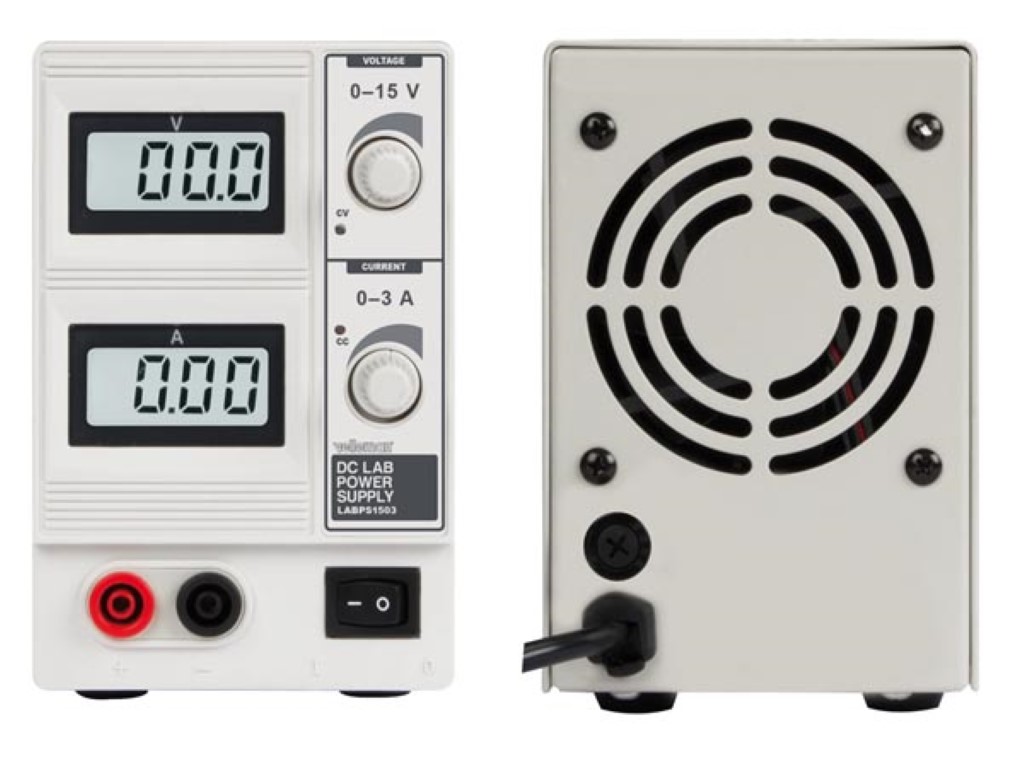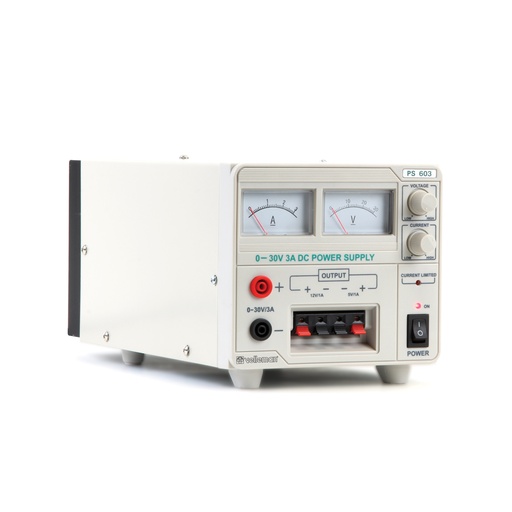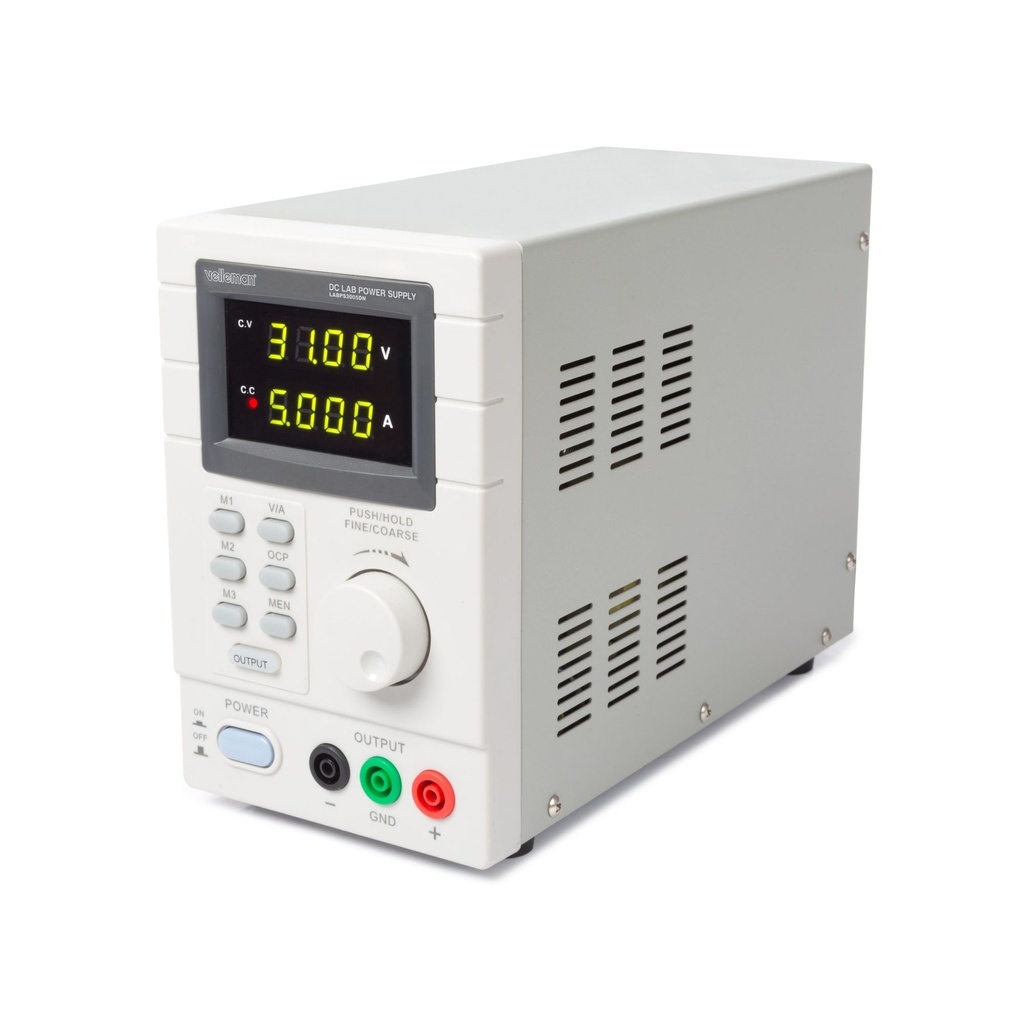

Set the supply voltage and limit the available current when testing an electronic circuit with these adjustable DC laboratory power supplies. The Standard Mode group includes single-output bench models, a dual adjustable supply with an additional fixed output, and a USB-programmable option for computer-controlled tests.
Compare the 0–15 V and 0–30 V models against your circuit’s needs, then select the current capacity for the load. A single output suits many individual circuits. The dual model offers two adjustable 0–30 V outputs plus a fixed 5 V output; follow its manual for channel operation and connections.
Voltage and current displays help you follow the load while making adjustments. Check the controls, current-limiting operation and stated output characteristics of each model. USB programming is useful when a computer needs to set the output during a test sequence.
Read the setup procedure before connecting your circuit, and check the included leads. Match all connection cables and terminals to the voltage and current you intend to use. Compare ripple and regulation specifications if your circuit is sensitive to variations in its supply.
Choose around the voltage and current your circuits require. A lower-voltage supply can suit low-voltage experiments, while a wider output range gives more flexibility. Compare control resolution and output channels as well as maximum power.
Choose multiple outputs when you need separate supply rails or want to power separate sections of a project. Check each channel's rating and supported coupling modes rather than treating all outputs as interchangeable.
Programming is useful for repeatable settings or computer-controlled test sequences. For manual circuit development, front-panel adjustment may be sufficient. Compare the control interface and supported software if automation is part of your workflow.
It lets you restrict the current available to a circuit while testing. Set a suitable voltage and limit for the load; current limiting helps reveal excessive consumption but does not replace correct wiring and polarity.
Look beyond output range to ripple, noise, regulation and setting resolution. These affect how the supply behaves in your circuit. Compare published values under their stated conditions rather than assuming every standard supply performs identically.