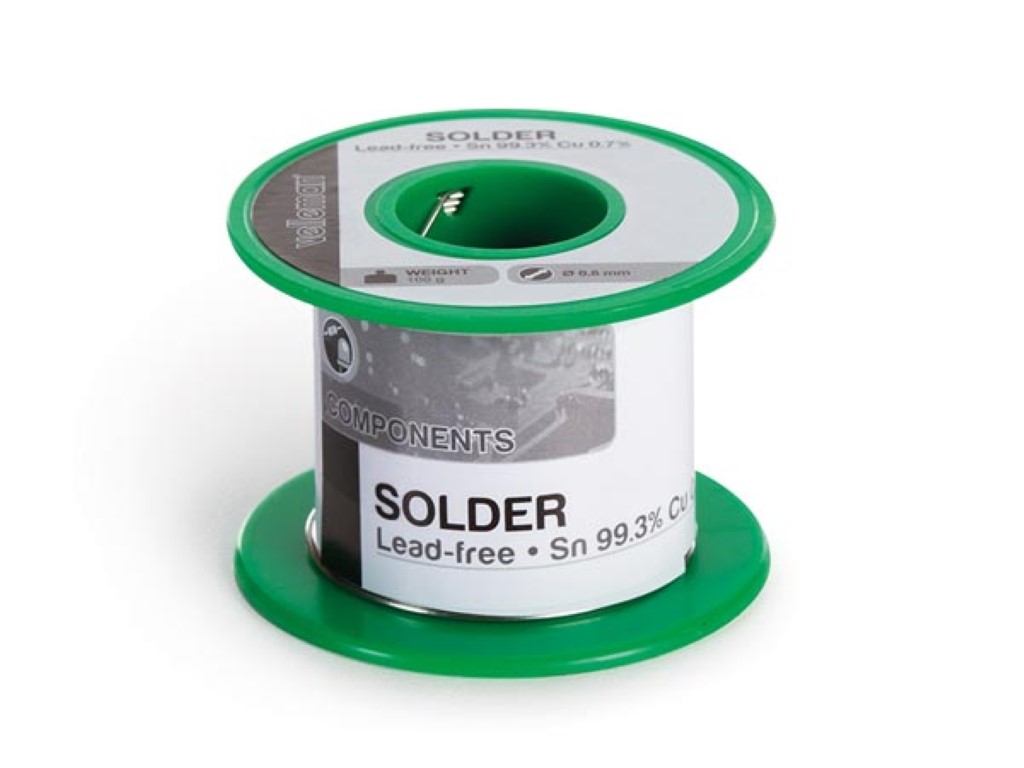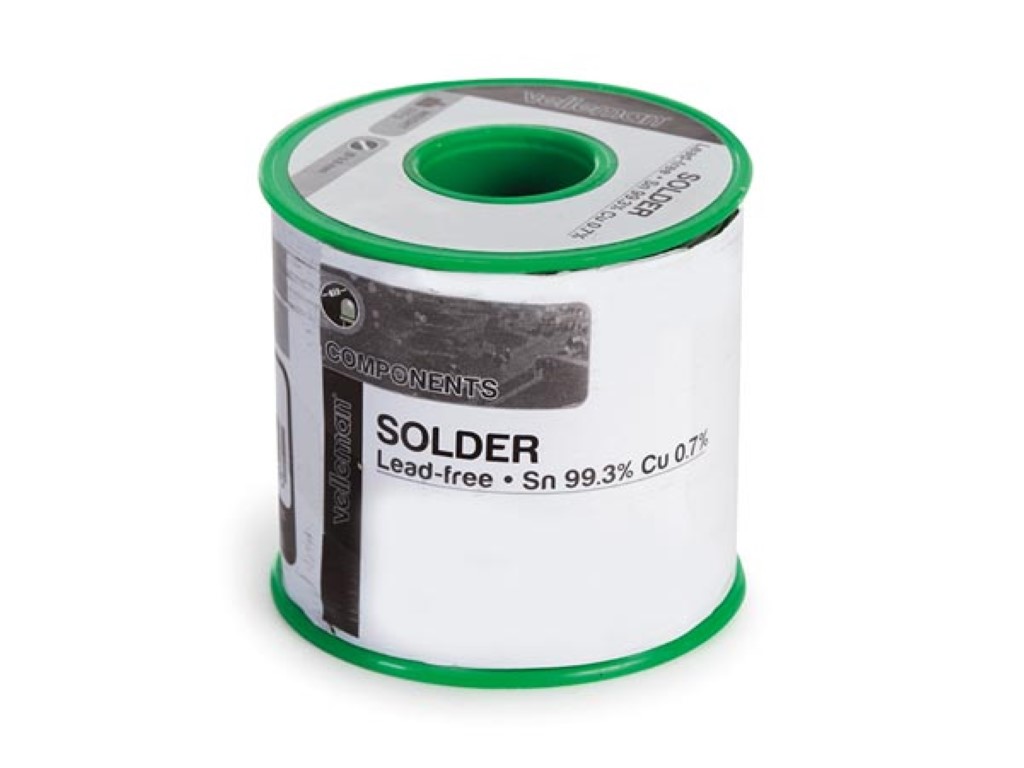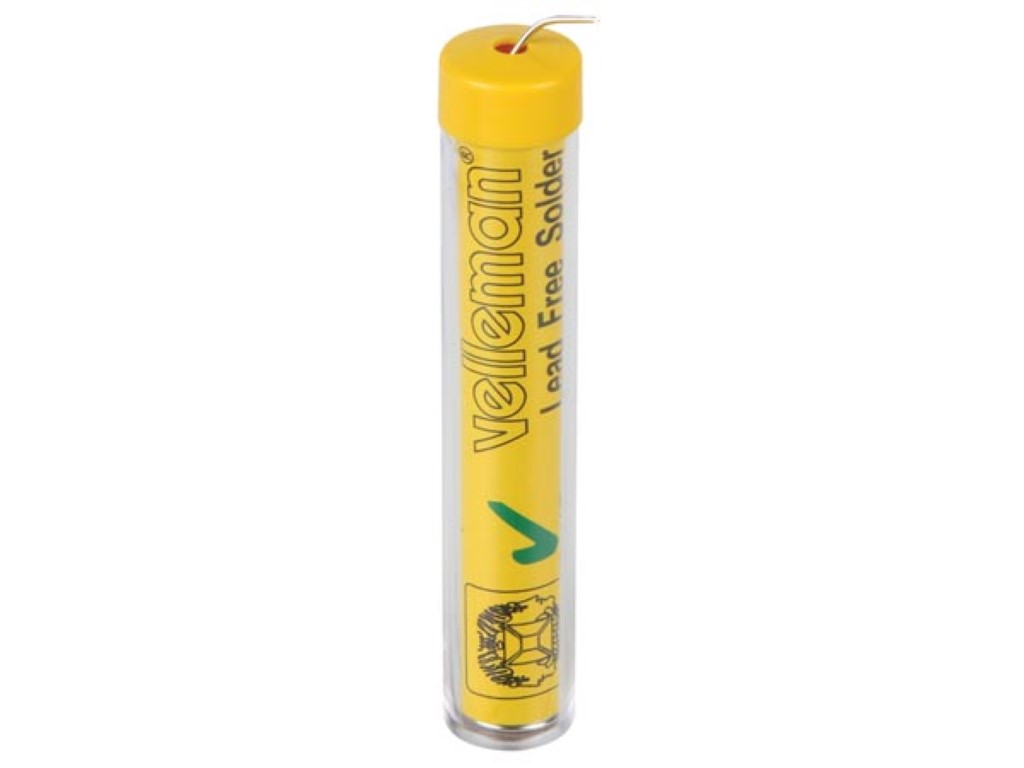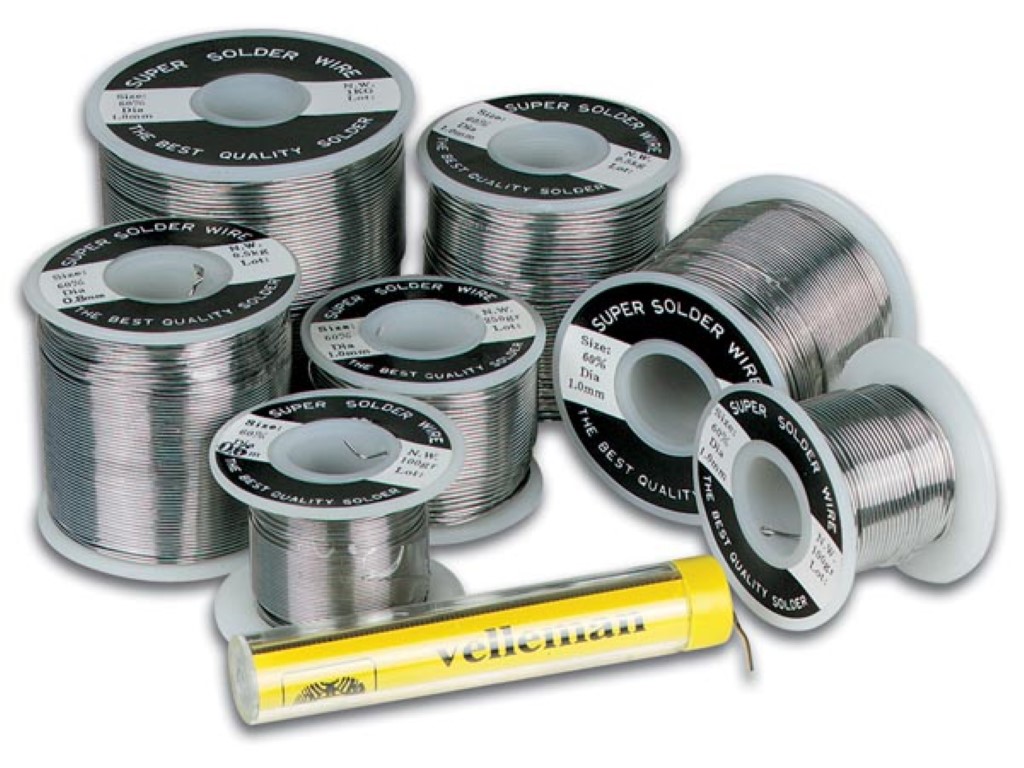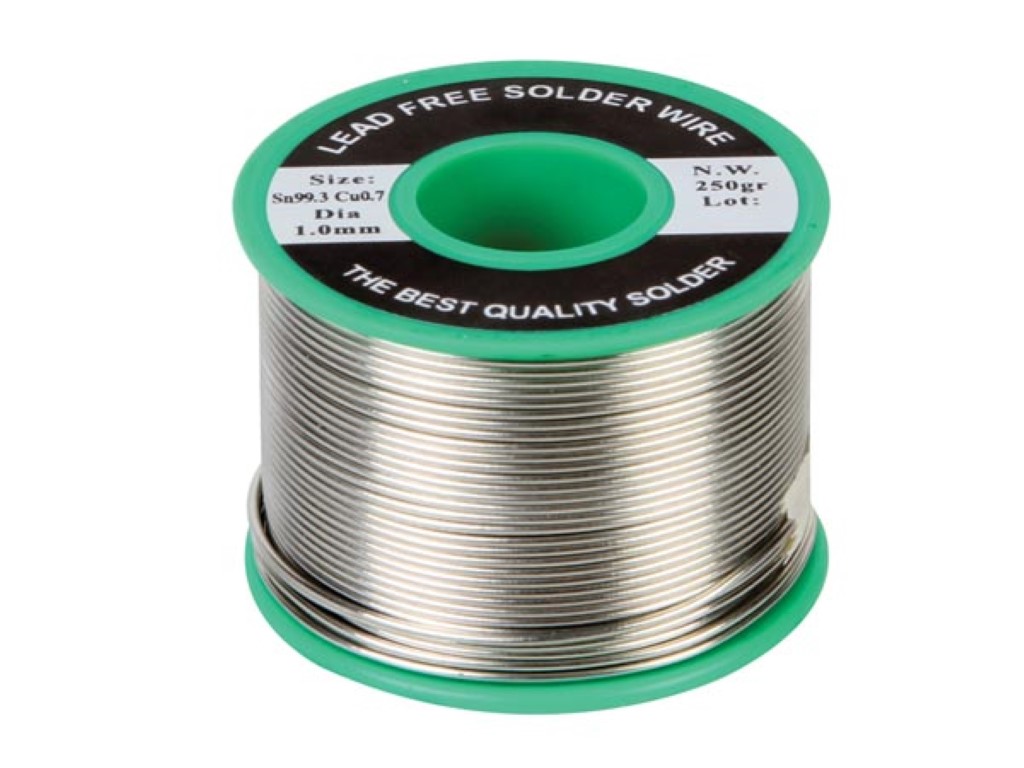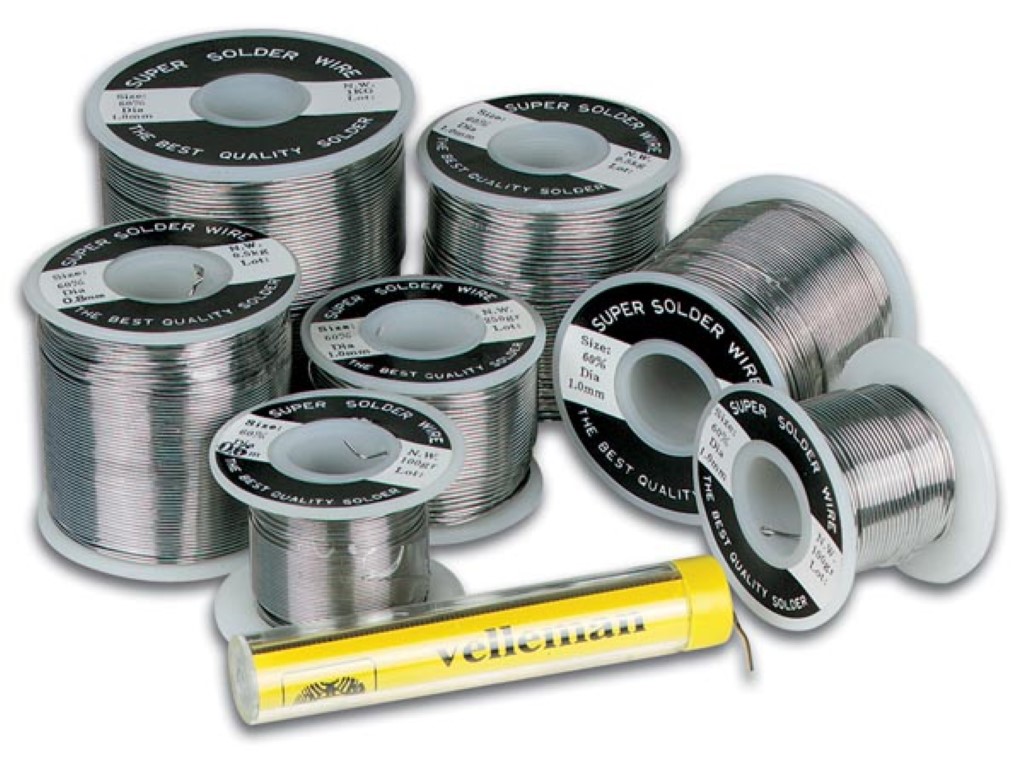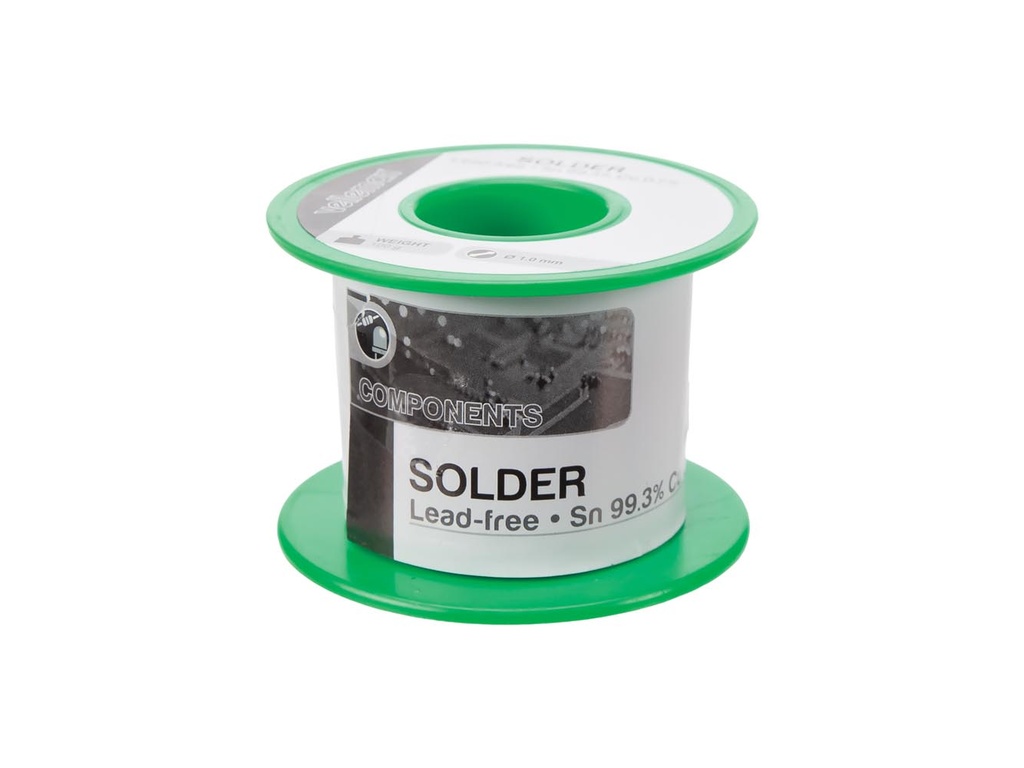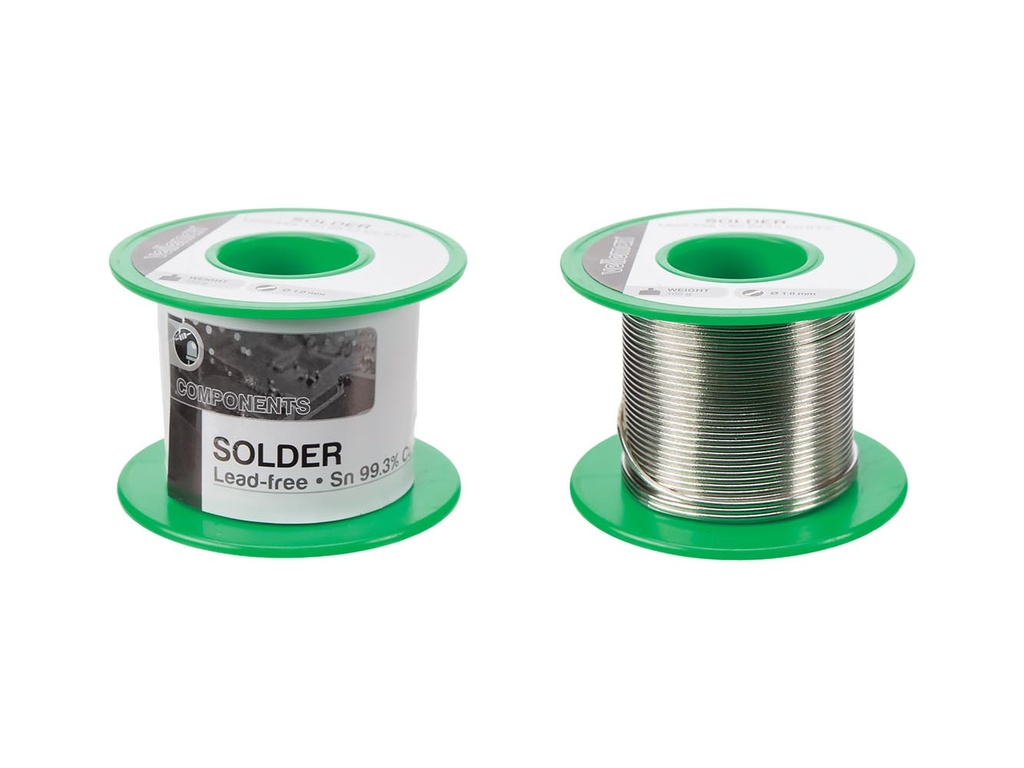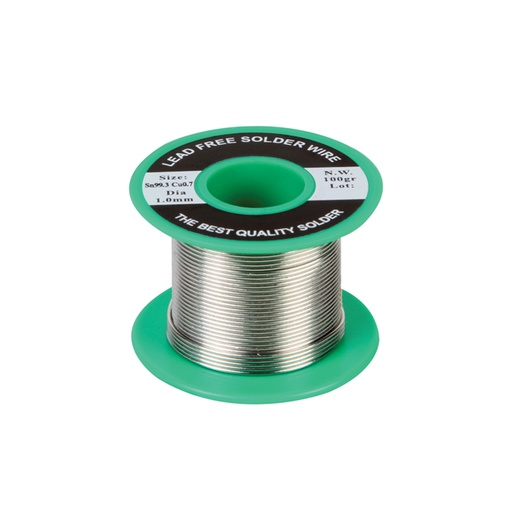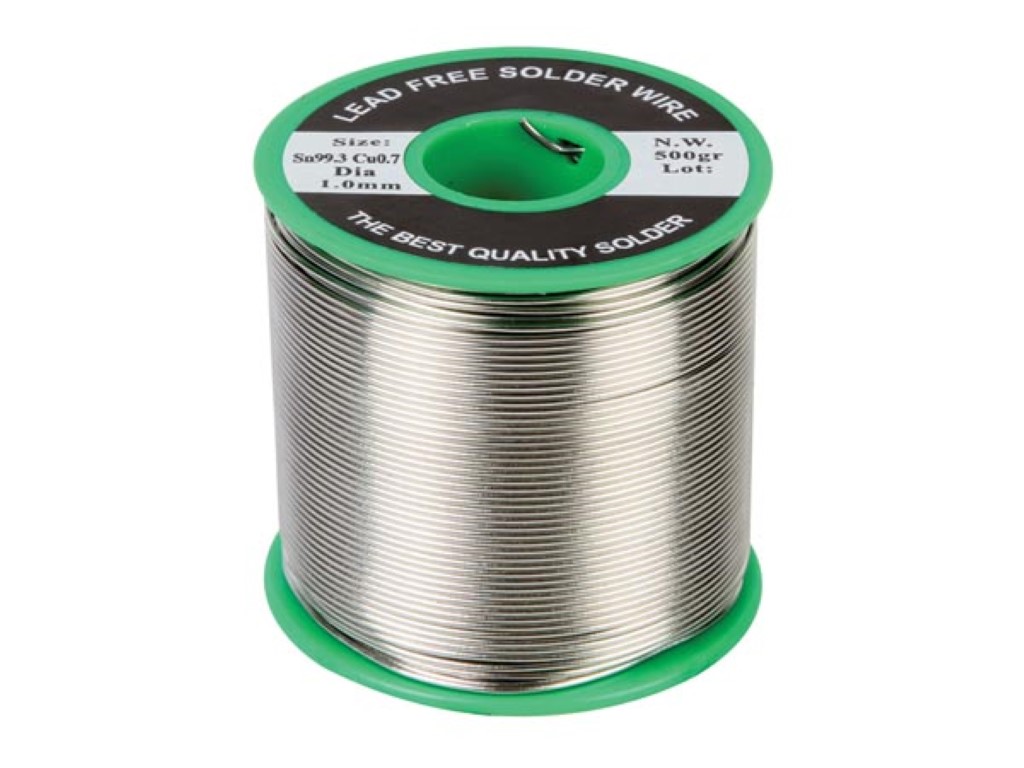
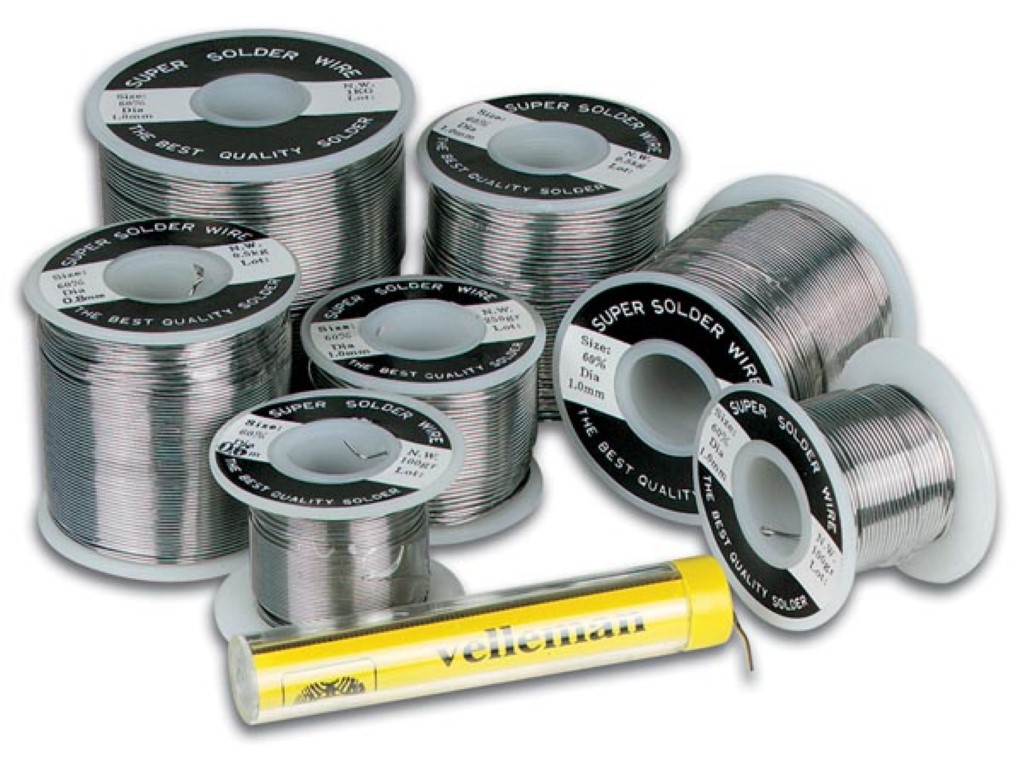
Choose lead-free solder wire for an assembly or repair that calls for a tin-copper alloy. This selection uses Sn 99.3% / Cu 0.7%, with wire diameters of 0.6, 0.8 and 1 mm across the range. Reels and a small dispenser offer different quantities for your soldering bench.
A 0.6 mm wire helps you feed smaller amounts to compact electronic joints. Larger diameters deliver more solder over the same length, which can suit larger connections. Choose by joint size and access, then compare the weight of the selected reel with your expected consumption. The small dispenser is useful when a full reel is more than you need.
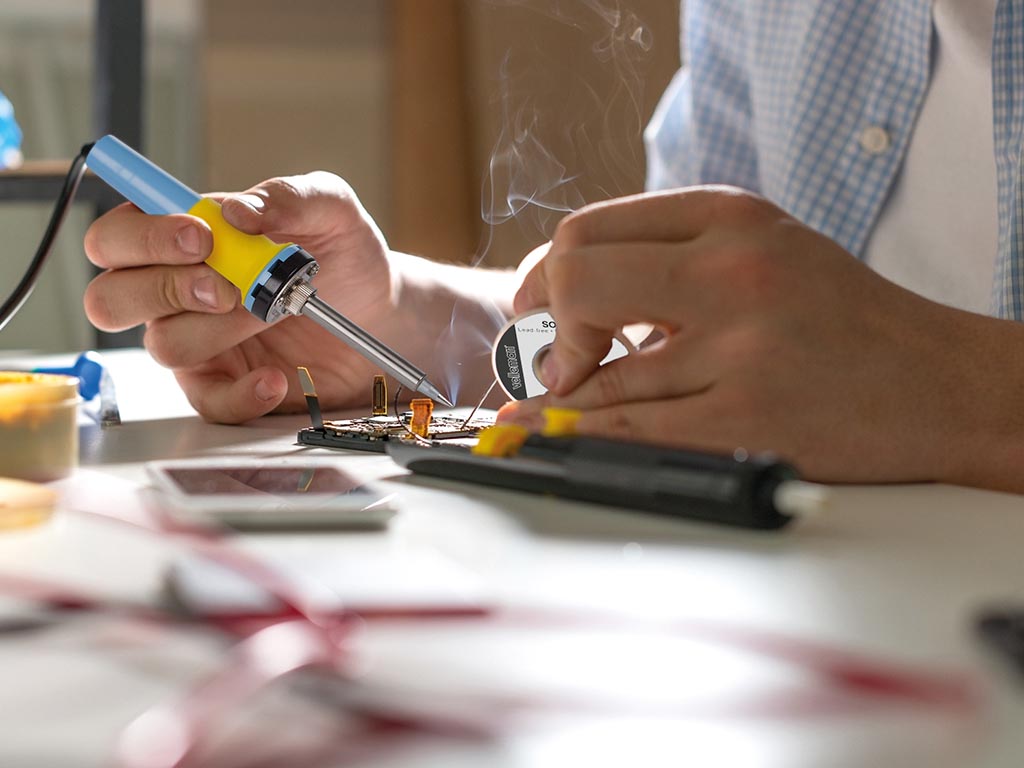
Check the flux information and the iron's suitability for the required process. Set working temperature for the tool, alloy and joint rather than treating the alloy's melting point as a universal iron setting. Keep lead-free material clearly identified and follow the product instructions for ventilation, handling and residue cleaning. Lead-free does not mean that soldering fumes need no control.
The listed lead-free wires use a tin-copper alloy, Sn 99.3% Cu 0.7%. Choose the required wire diameter and pack size within that alloy. Lead-free describes the composition; it does not mean every lead-free solder available elsewhere has the same properties.
Use finer wire when you need controlled amounts on small joints; choose a larger diameter when feeding more solder to larger connections. The range includes different diameters, so match the wire to the work rather than choosing only by reel weight.
Your iron needs suitable heat transfer, a compatible tip and enough thermal recovery for the joint. Temperature control is helpful for repeatable work. Do not compensate for poor tip contact simply by selecting the highest temperature; that can stress components and tips.
Yes, flux remains part of the soldering process. Resin-cored wire provides flux while it melts, and some repair work may need suitable additional flux. Select an electronics-compatible product and follow its residue-cleaning requirements rather than using a plumbing flux.
No. Flux can still release irritating fumes during lead-free soldering. Use appropriate ventilation or extraction, keep your face out of the plume and maintain a clean work area. Lead-free composition does not make the hot tool, residues or process harmless.