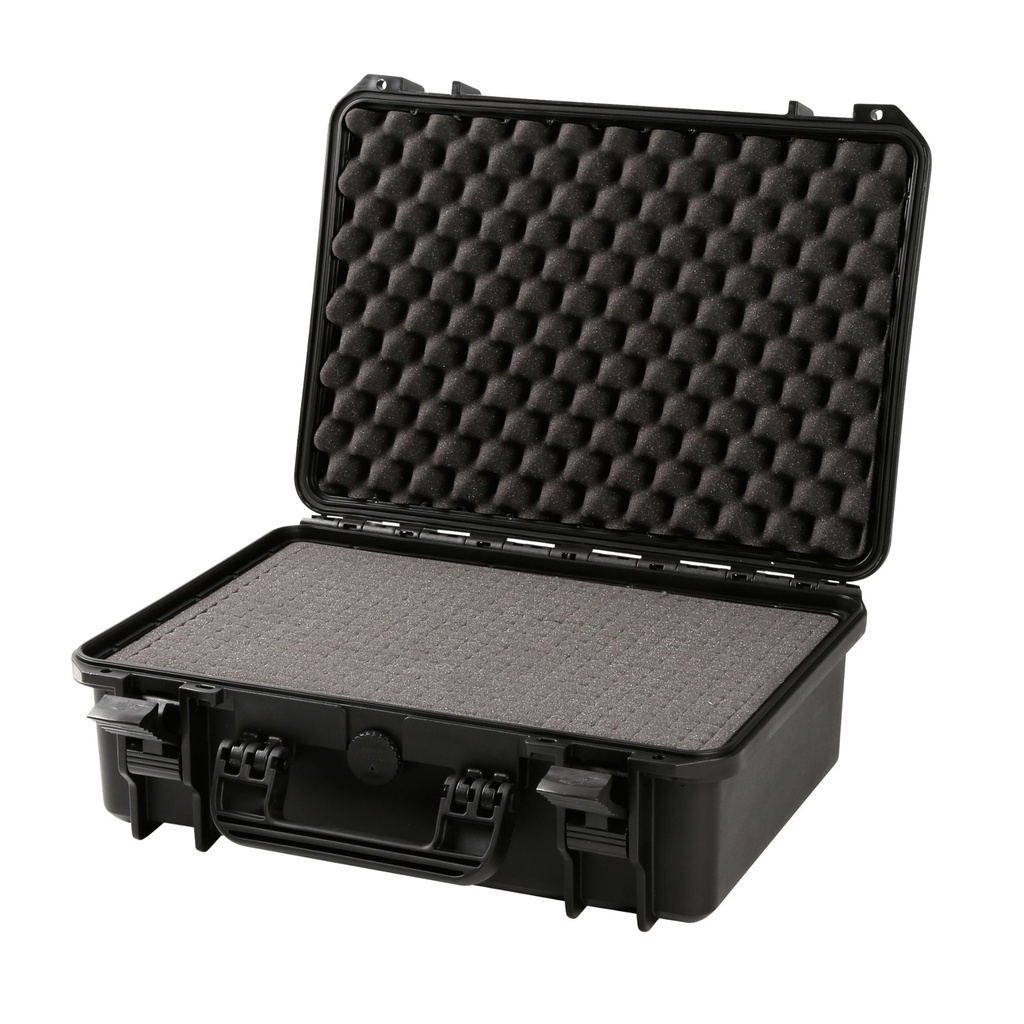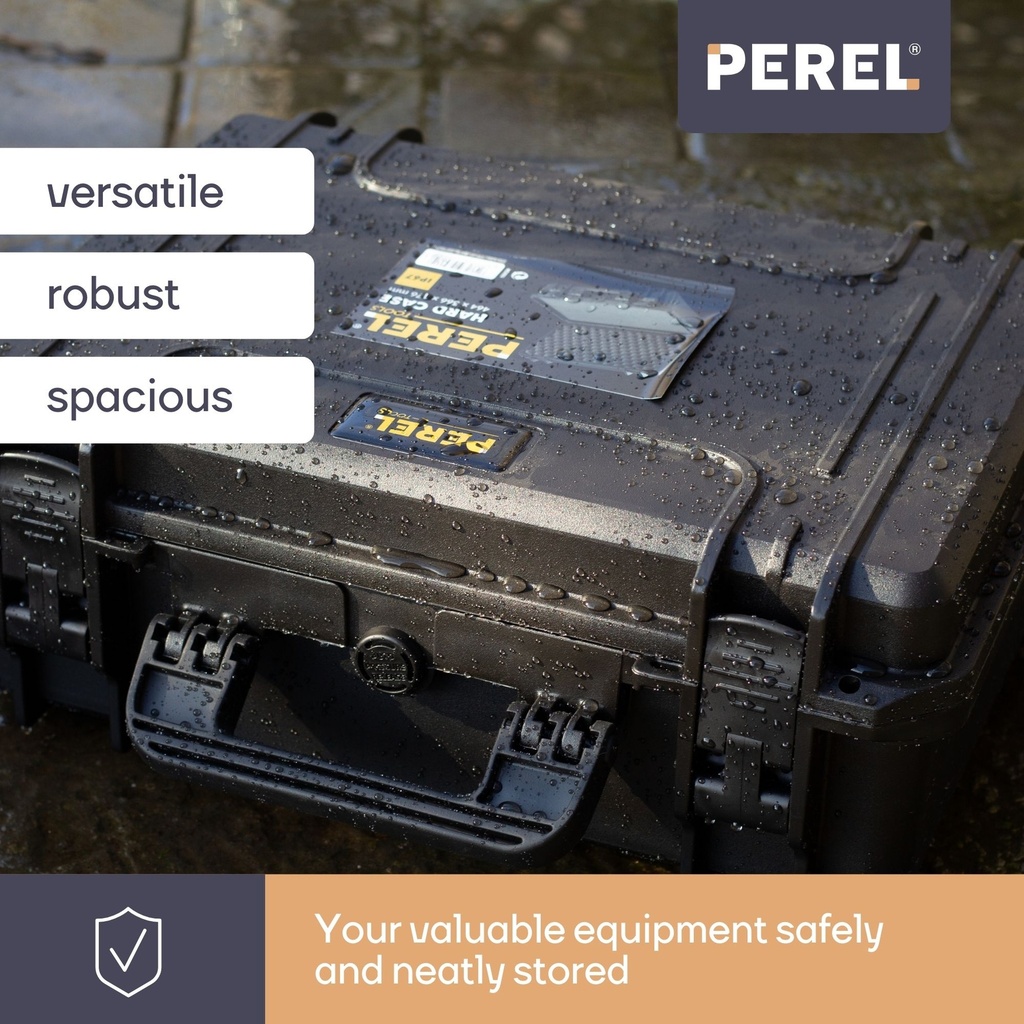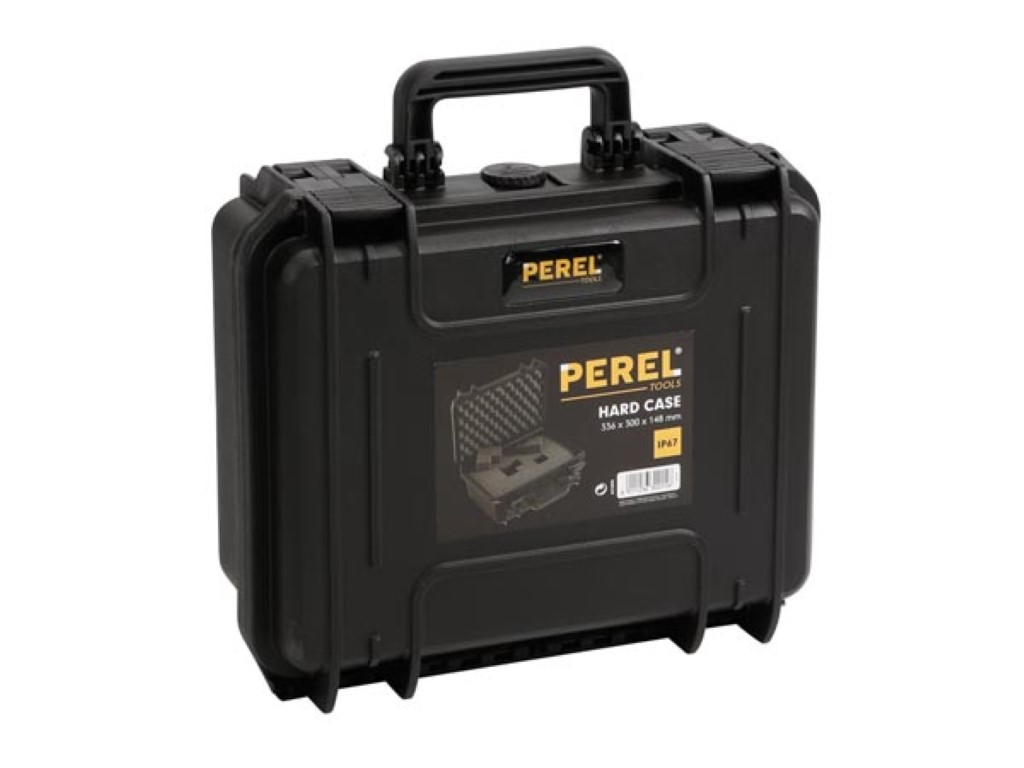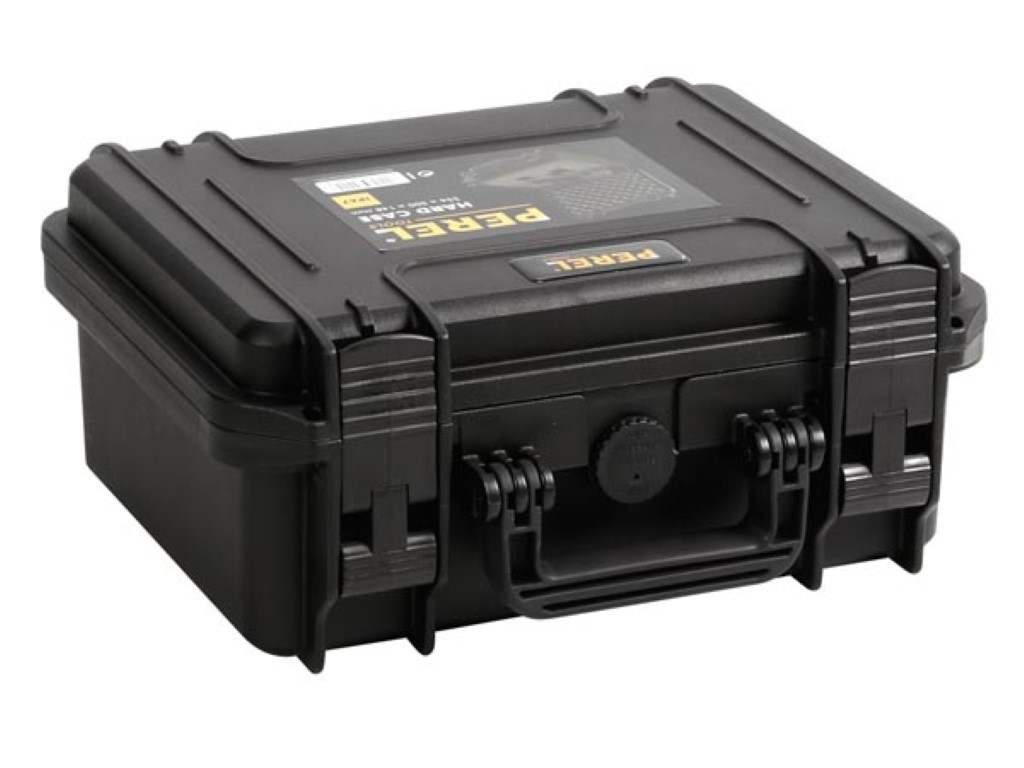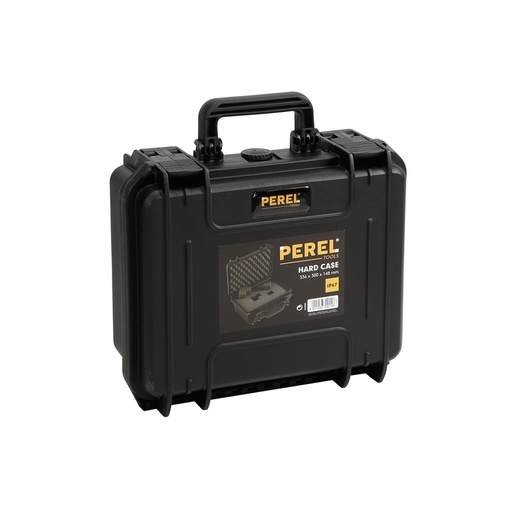
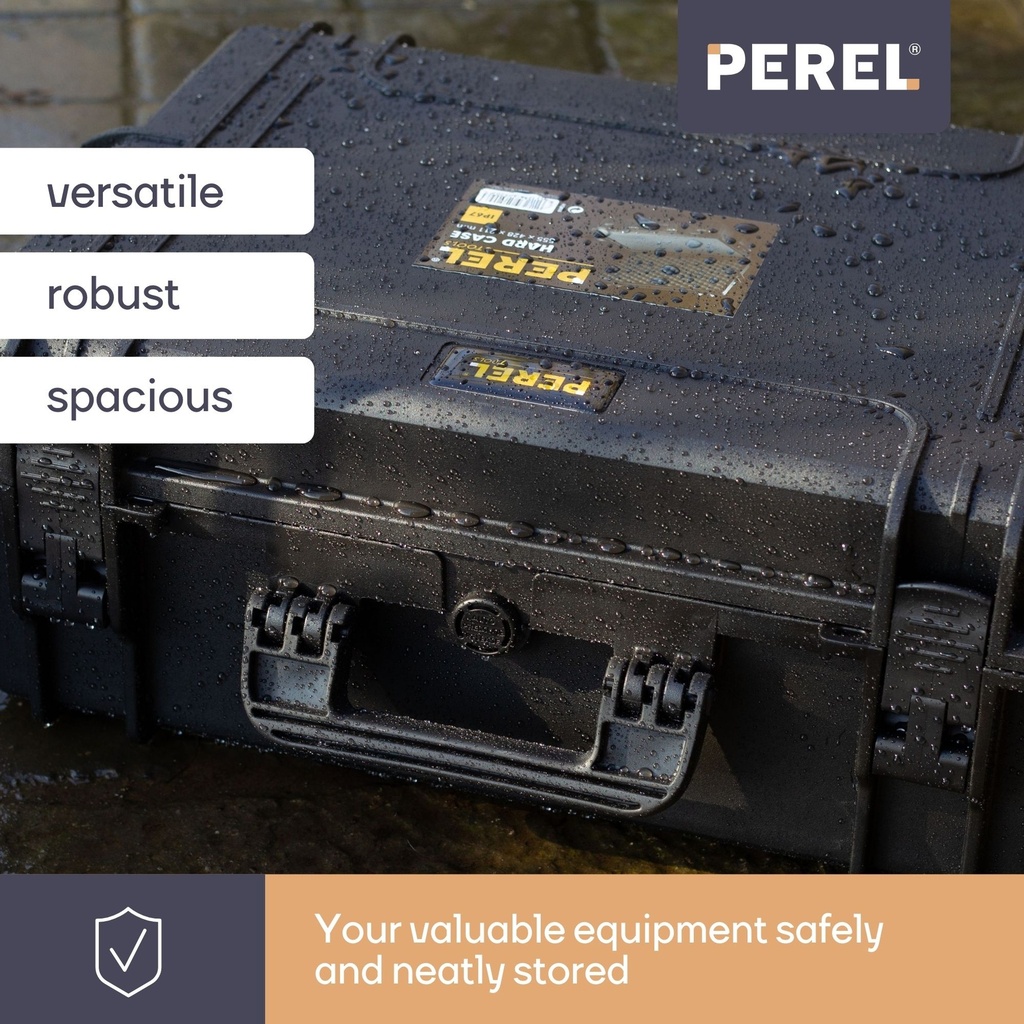
Protect equipment from water and dust during storage and transport with sealed, foam-lined hard cases. The Perel HC300S, HC430S and HC505S combine a rigid polypropylene shell with configurable foam and secure latches. Choose the size that holds your equipment with enough cushioning around it, while remaining practical to carry.
These three models are specified as IP67 by the manufacturer. Check the individual product details and make sure the case closes correctly with nothing caught at the sealing edge. Keep equipment and accessories below the closure line rather than compressing an oversized load into the lid.
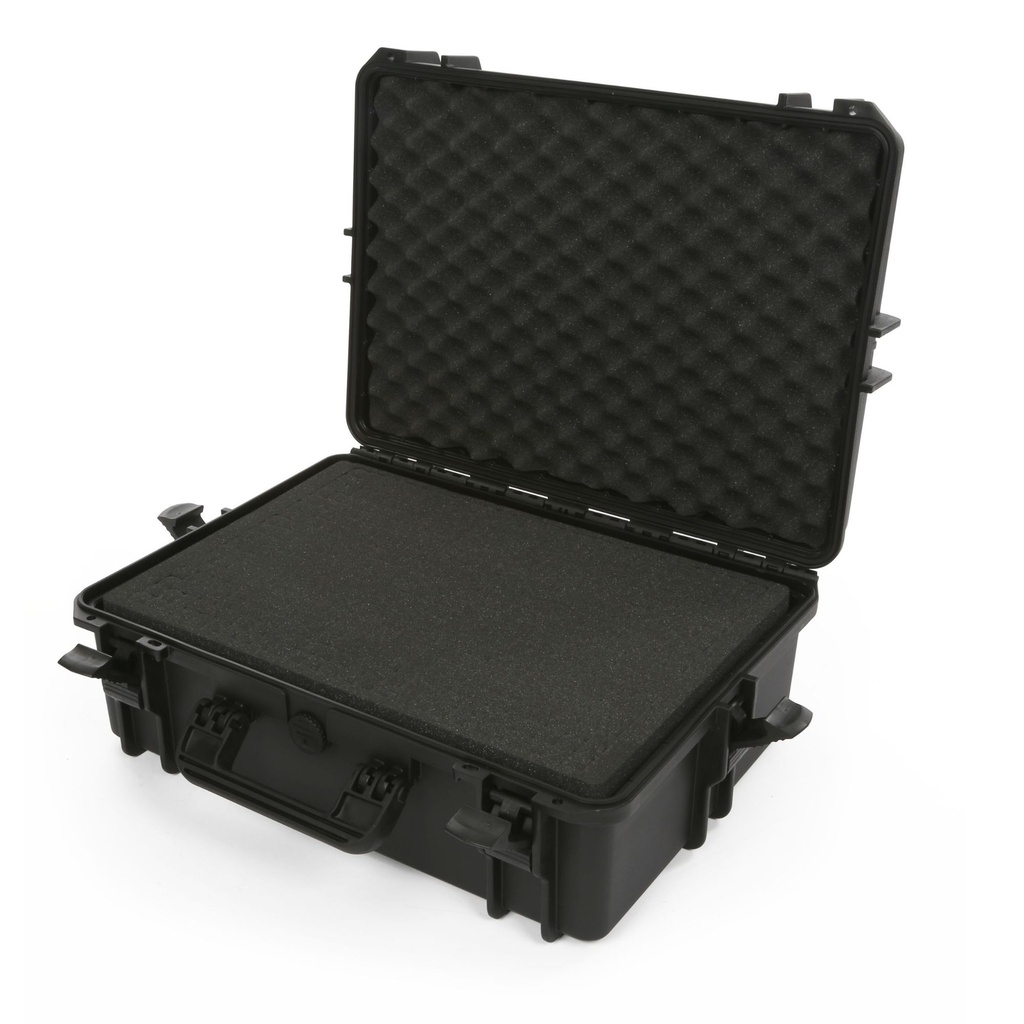
Pick-and-pluck foam supports a tailored layout, while the lid's profiled foam cushions from above. Allow enough material between individual recesses to keep parts separated. Compare internal dimensions and loaded weight before choosing.
Start with usable internal dimensions, the interior layout and the stated protection rating. Then consider carrying weight, latches and how often the case travels. Choose protection for the expected environment rather than relying on the words hard case alone.
Pre-cut foam lets you remove sections to create recesses around equipment. Leave enough foam between items and around the edges to support them. Plan the layout before removing pieces, including room for accessories and clearance around delicate controls.
An airtight case does not remove moisture already trapped inside. Pack dry equipment and avoid sealing a damp interior. Temperature changes can still cause condensation; allow equipment to acclimatise and use suitable moisture control when the application requires it.
An IP rating describes tested protection against solid objects and water under defined conditions. Compare the complete rating and the manufacturer's conditions. Correctly closed latches and an undamaged, clean seal are essential to the case's intended protection.
Allow for foam or dividers on the sides and beneath the equipment, plus sufficient lid clearance. Avoid tight packing that presses on knobs, lenses or displays. Compare your planned layout with usable internal dimensions rather than the case's external size.