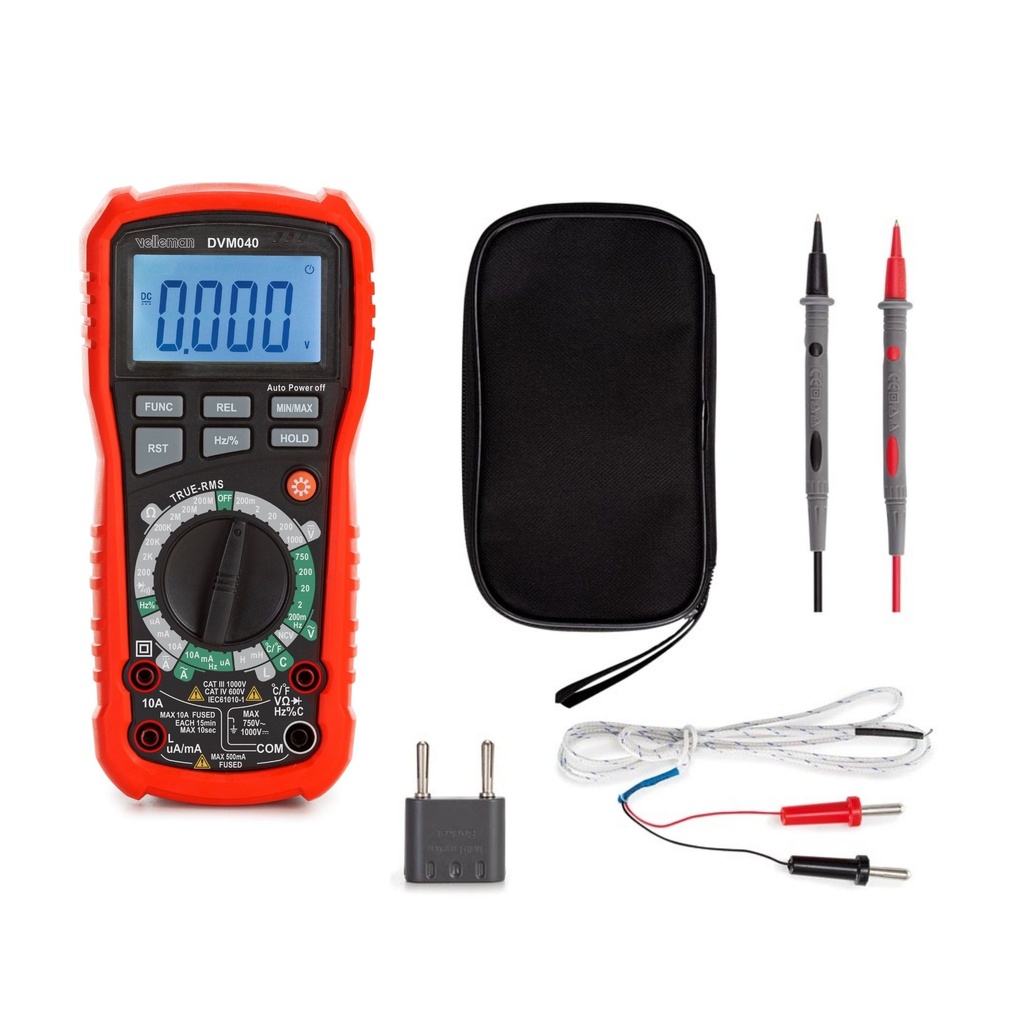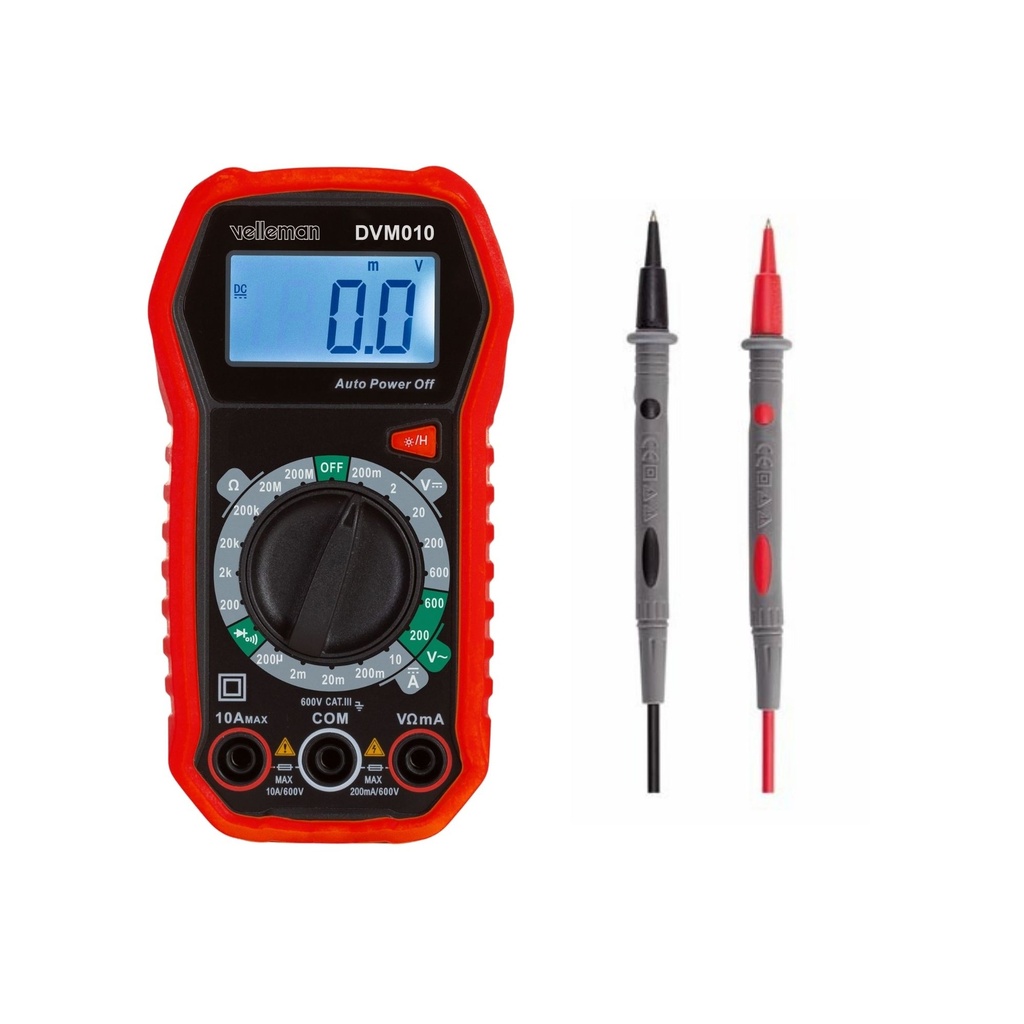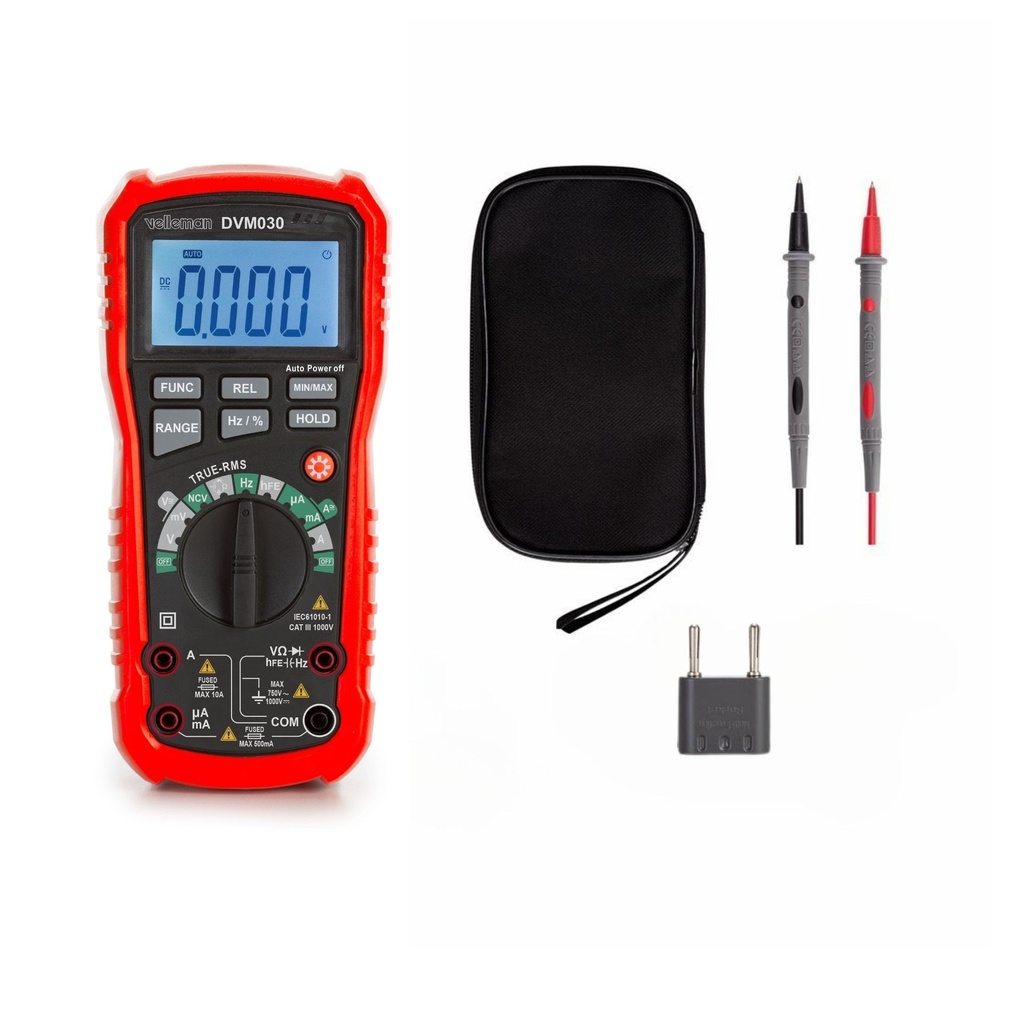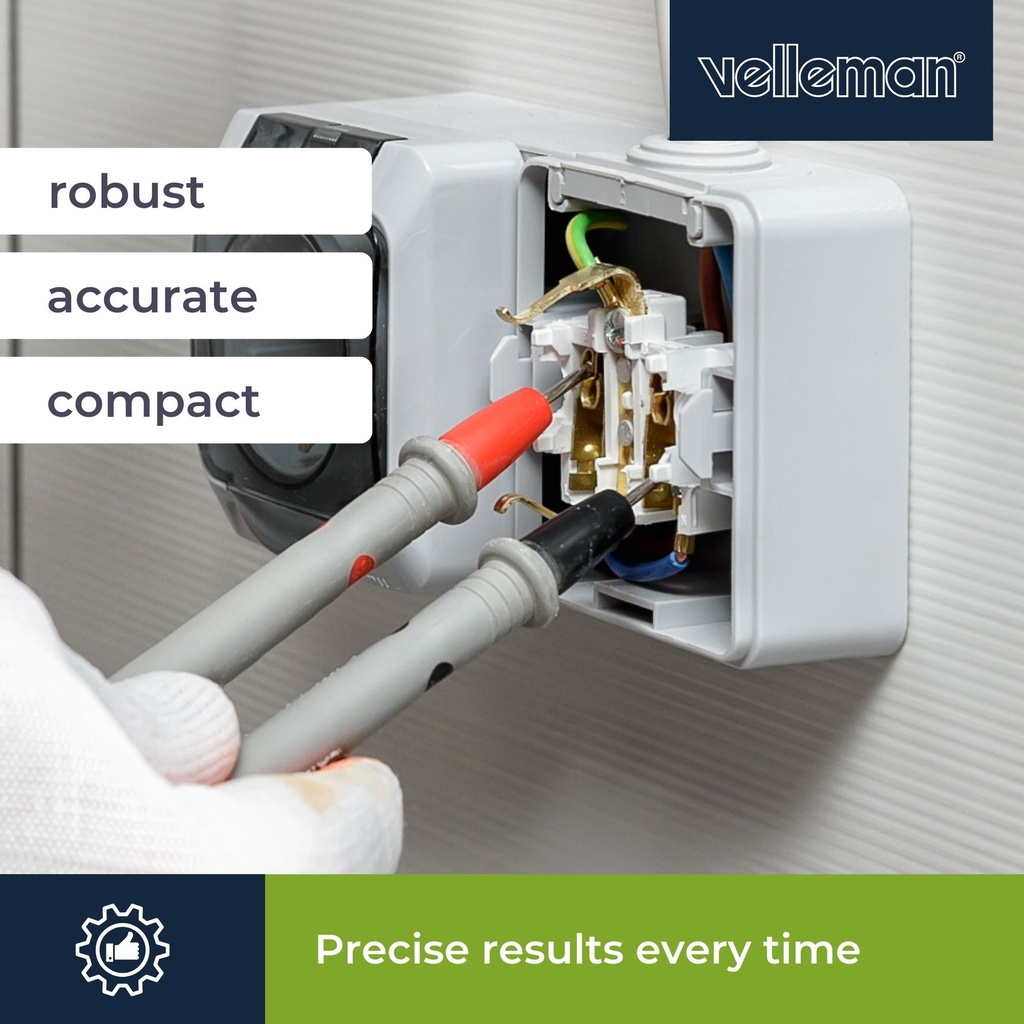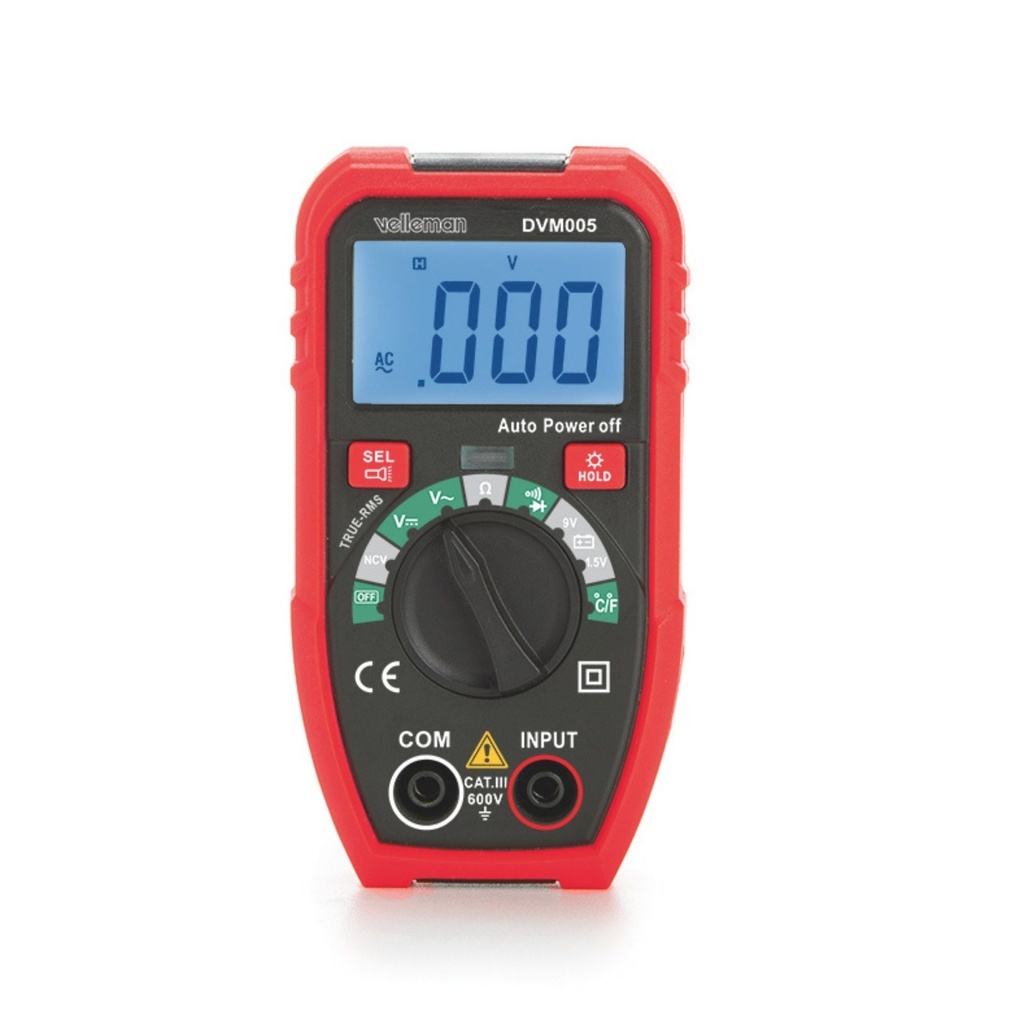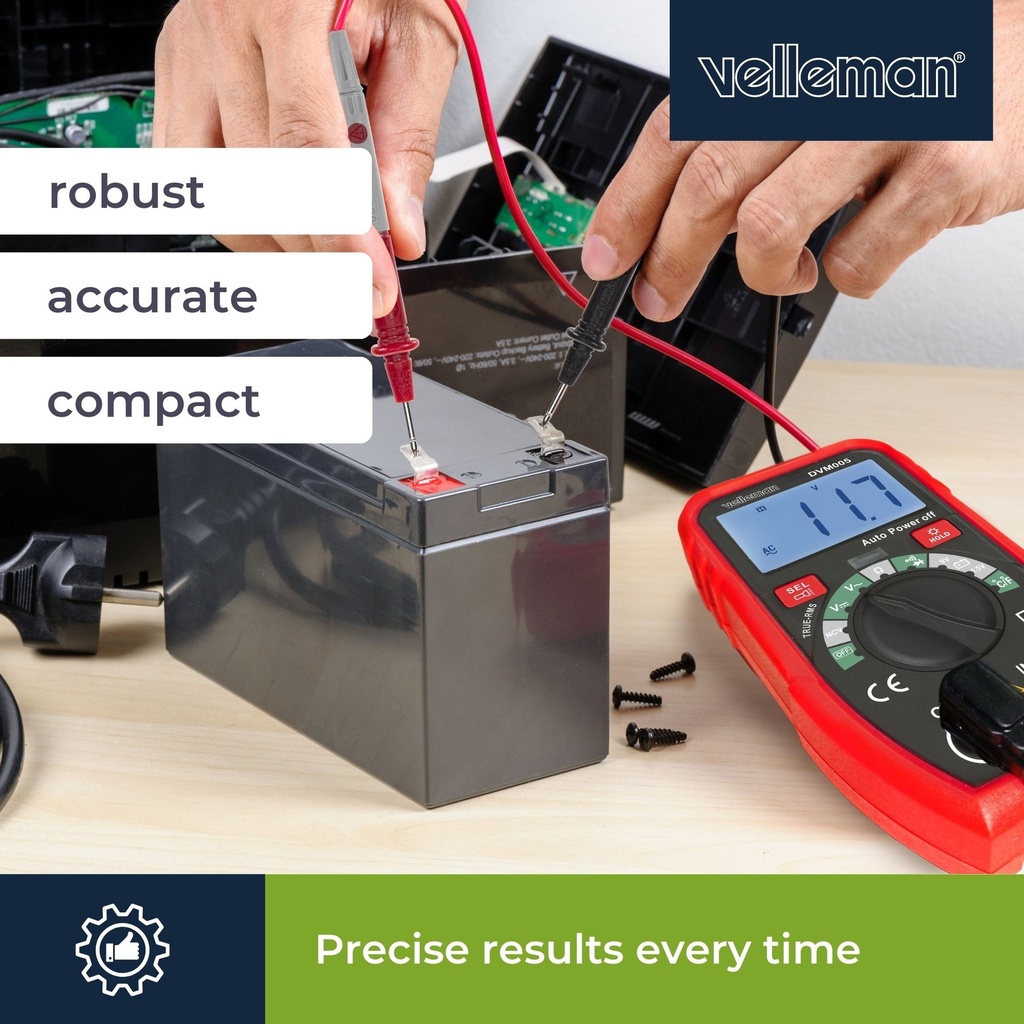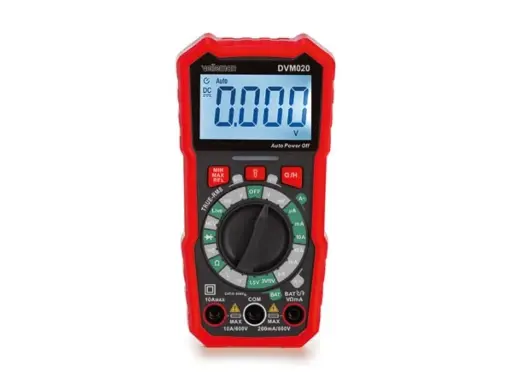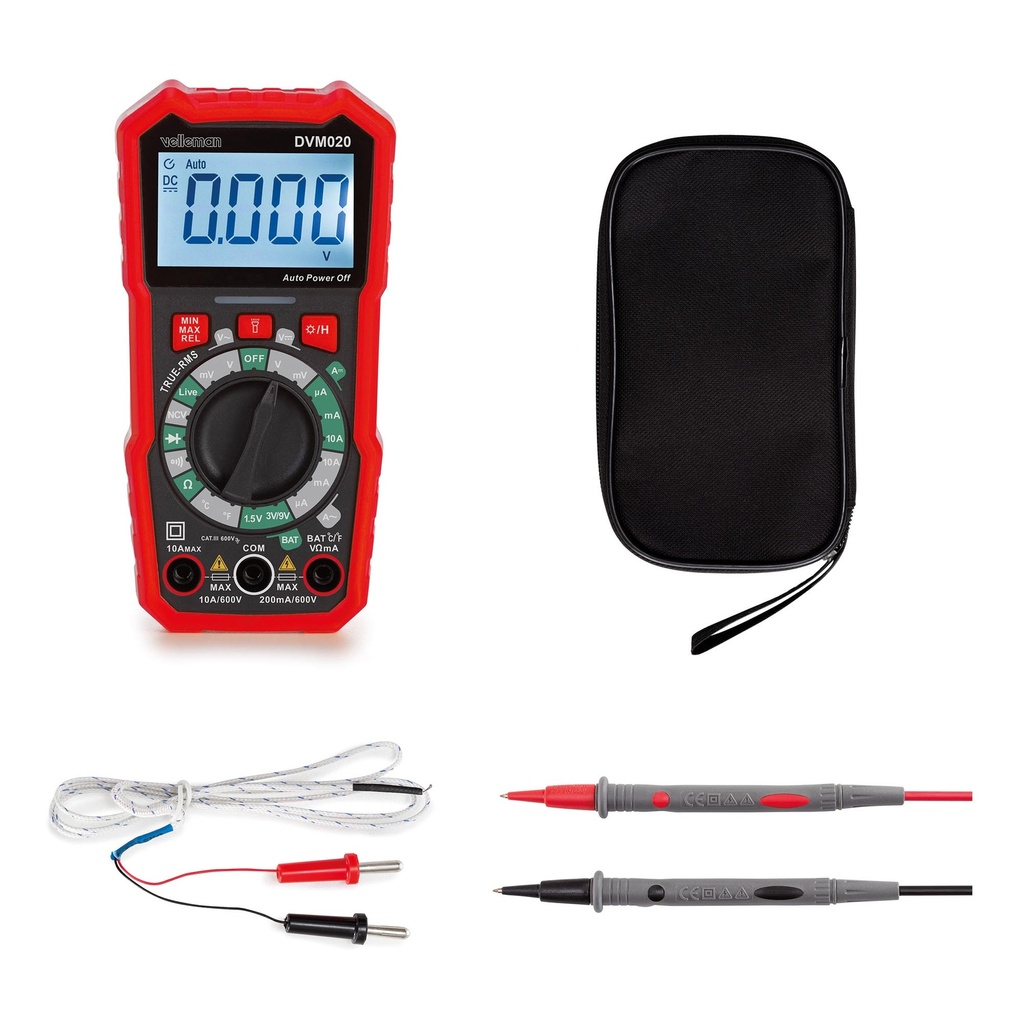
Find electrical faults and check circuit values with a digital multimeter suited to your work. The range runs from compact meters for essential checks to True RMS models with additional measurement functions. Choose the quantities you need to measure first, then compare ranges, operation and the instrument's stated electrical limits.
Voltage, resistance and continuity are common starting points. Current, capacitance, frequency, temperature or transistor tests vary by model, so check the actual function list. True RMS measurement can matter for AC work; it does not remove the need to respect bandwidth and other conditions in the specifications. Automatic ranging is convenient when changing measurement levels, while manual ranging gives you direct control of the selected range.
Also compare display readability, hold functions, size and supplied accessories. A temperature function and probe must both cover the temperature you intend to check. For current measurement, verify the input socket, fuse and permitted measurement duration.
Match the meter, leads and accessories to the measurement environment and their individual ratings. Read the instructions before changing connections or functions; the highest number printed on a meter does not apply to every mode or input.
Start with the quantities you need: AC/DC voltage, resistance, continuity and, where required, current. Then consider capacitance, frequency or temperature for your projects. Choose a suitable measuring range and safety category before comparing display and convenience features.
With manual ranging, you select the measurement range yourself. An autoranging multimeter selects a suitable range within the chosen function, making varied measurements more convenient. Both still require the correct function, sockets and electrical limits for the task.
True RMS is useful when measuring AC waveforms that are not clean sine waves, such as some electronically controlled loads. It does not guarantee accurate readings for every waveform: the instrument’s frequency range, crest-factor limits and other specifications still apply.
The CAT category describes the electrical environment and transient conditions for which the meter is rated; the accompanying voltage is equally important. Choose both for the measurement location and use suitably rated leads. A higher maximum reading is not a substitute for an appropriate CAT rating.
Only the functions and ranges specified for that model. Temperature may require a compatible probe, while capacitance or AC current may be absent from simpler meters. Compare the actual function table and included accessories against your intended measurements before choosing.