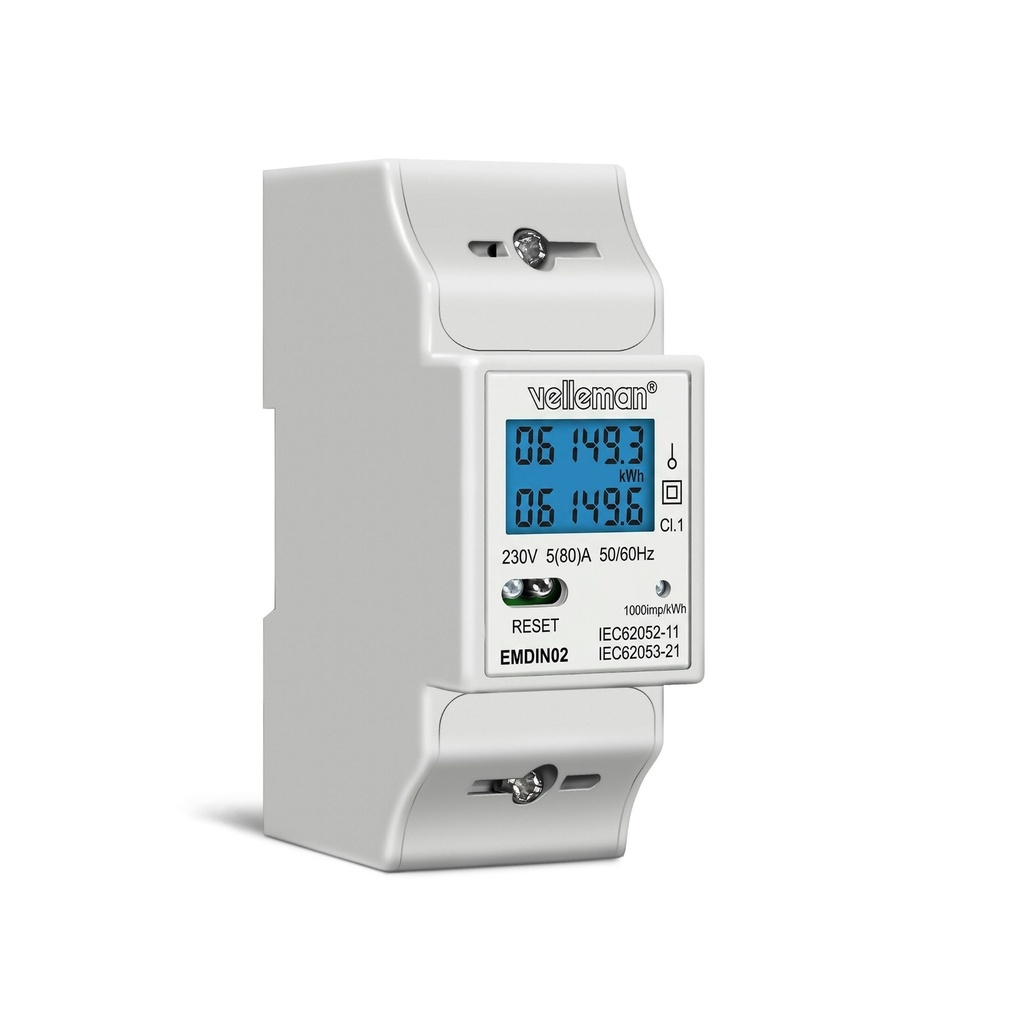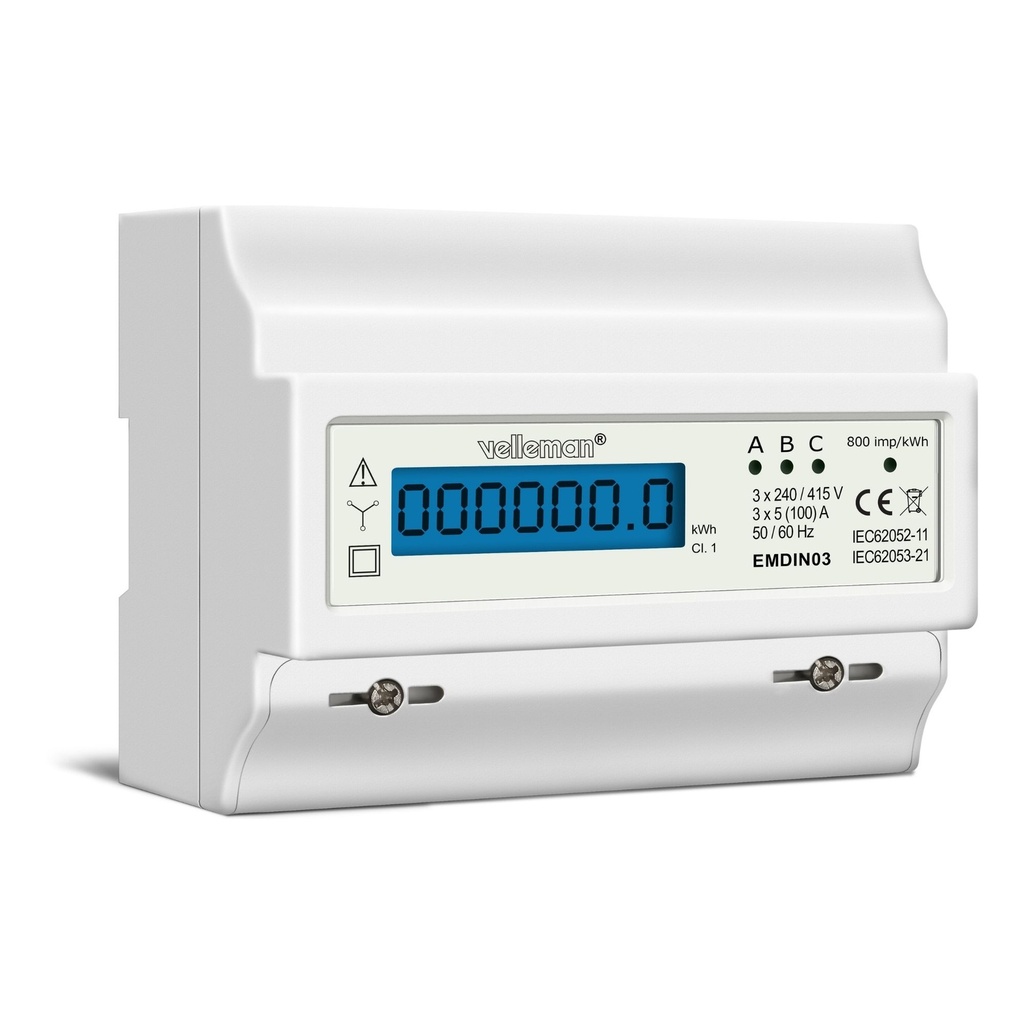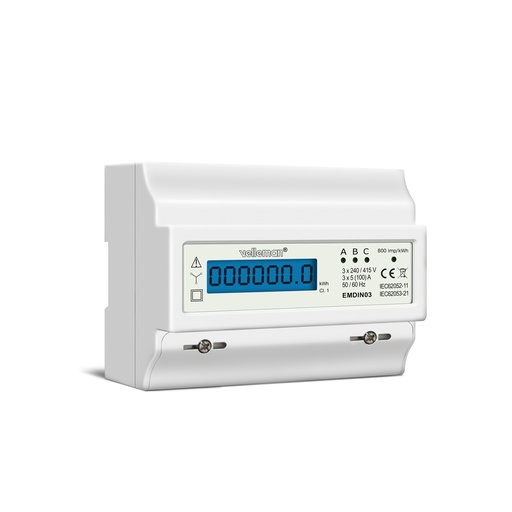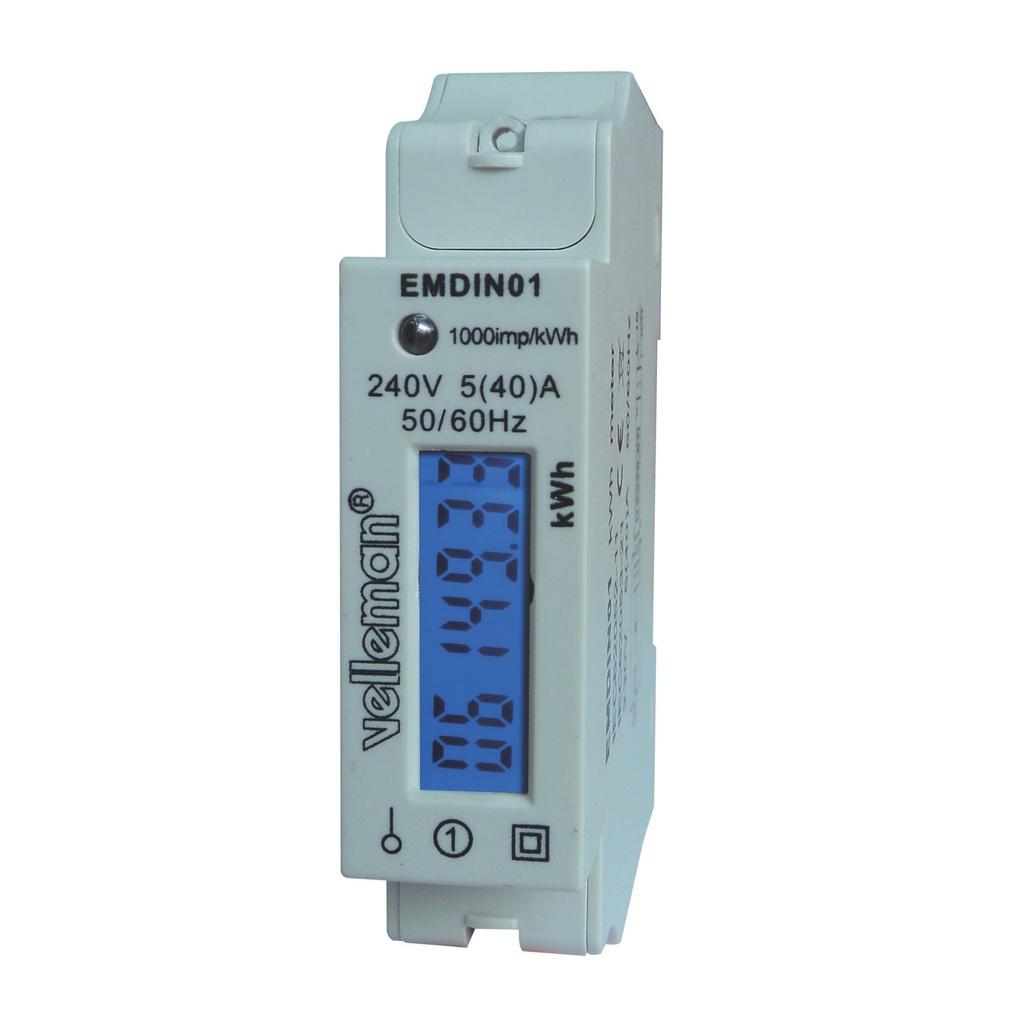
Follow electricity consumption in a distribution board with a DIN rail energy meter. The range includes single-phase EMDIN01 and EMDIN02 meters and the three-phase EMDIN03. These fixed-installation kWh meters help make the energy use of a suitable circuit visible, with different module widths for different board layouts.
First establish whether the circuit is single-phase or three-phase. Then compare the electrical ratings, wiring arrangement and available DIN rail space. The single-phase models occupy one or two modules; the three-phase model uses seven. Selecting by width alone is not enough: the meter must match the circuit's voltage and current requirements.
Consider how you will read consumption and whether the specified indication or output fits your monitoring approach. These are board-mounted instruments rather than plug-in appliance meters. Check the installation instructions and terminal requirements before choosing, and arrange installation by someone qualified for the electrical work. Do not assume that an energy display makes a model suitable for billing or every generation system.
A DIN-rail meter monitors a wired circuit or installation and requires installation by a qualified technician. A plug-in meter suits an individual appliance with a matching plug. Choose according to what you want to monitor and how it is connected.
Match the meter to the electrical supply and circuit. A single-phase meter and a three-phase meter have different wiring requirements. Choose the correct phase configuration together with suitable voltage and current ratings before installation.
kW expresses power at a particular moment. kWh expresses energy used over time. An energy meter helps compare consumption across periods; multiplying measured kWh by an applicable unit tariff gives an energy-cost estimate.
Reset functions vary. Some meters offer a separate resettable period counter, while others retain a cumulative total. A useful alternative is recording the total at the beginning and end of the period and calculating the difference.
Do not assume an informational energy meter is approved for billing. Required certification and local rules depend on the use. Verify the exact meter's approval before choosing it for legally relevant cost allocation.