329.75 €
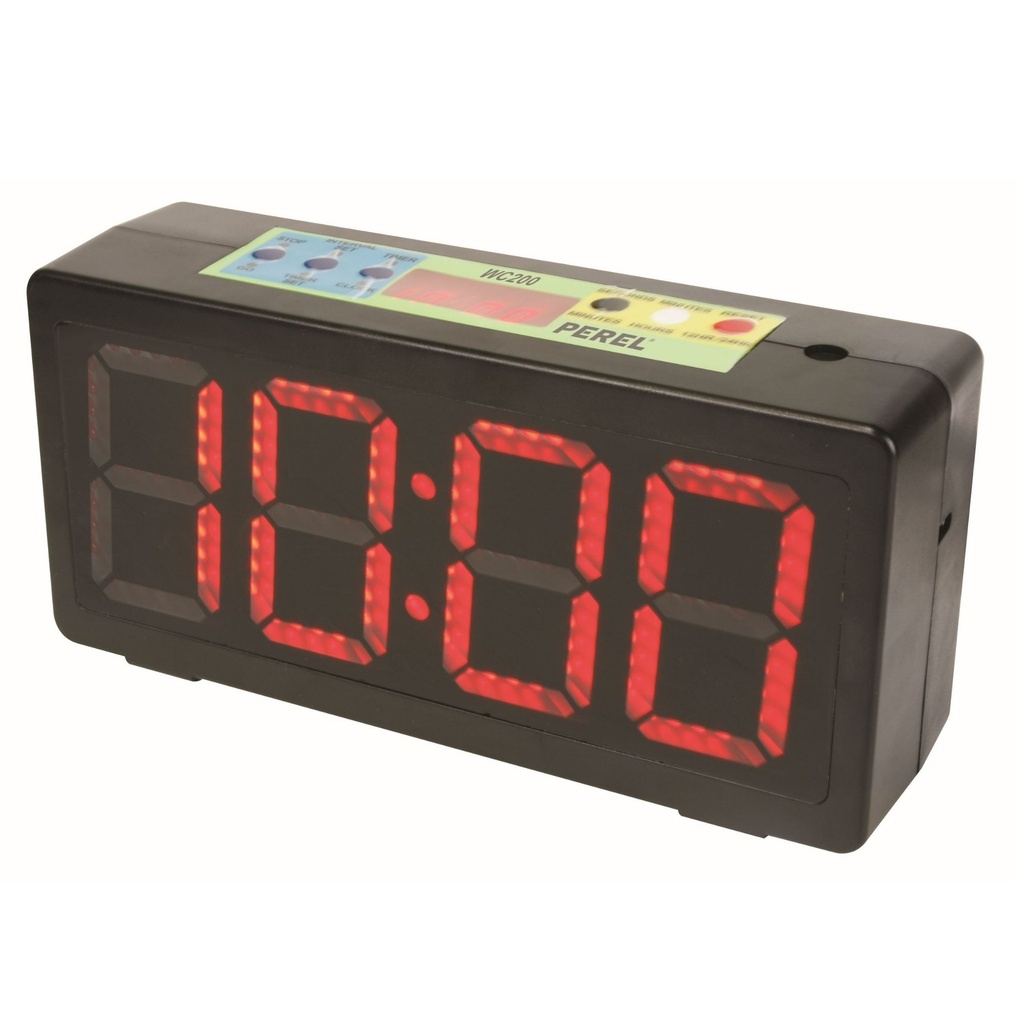
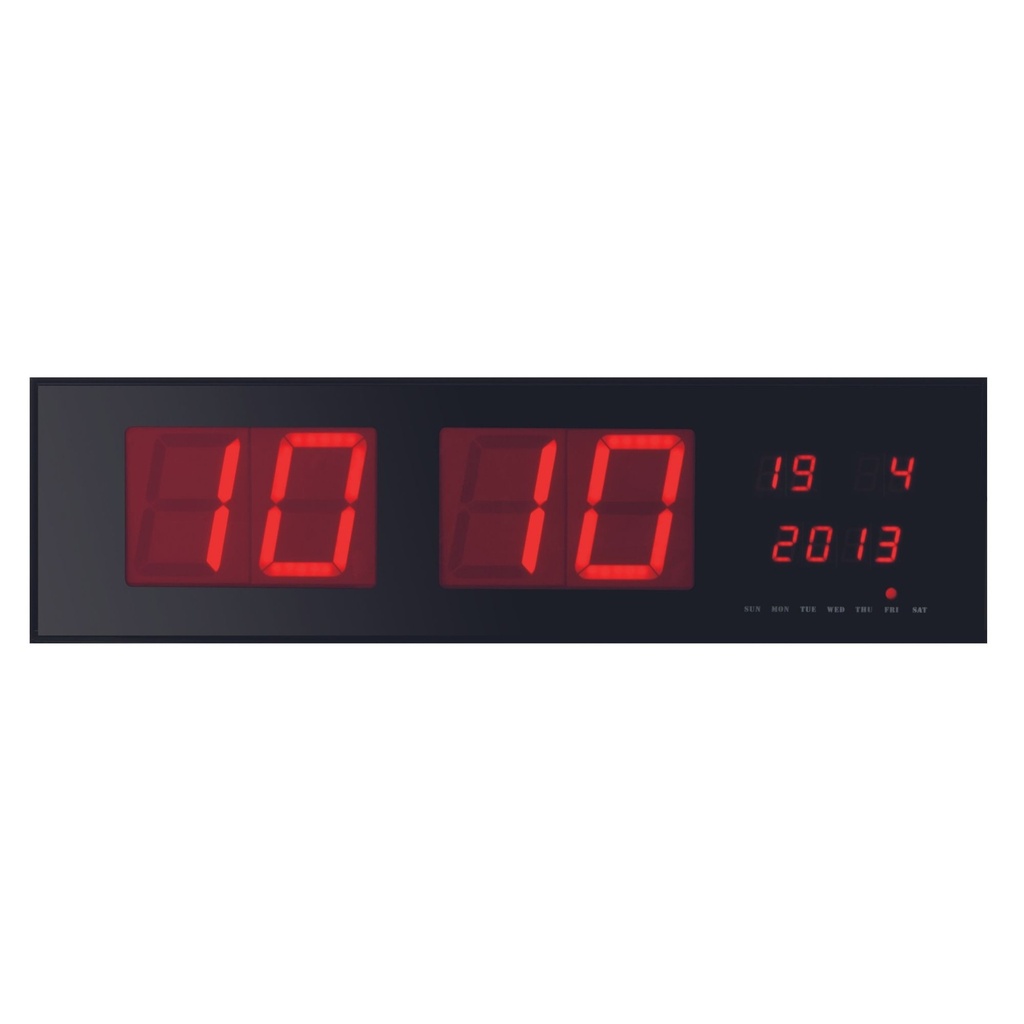
Make the time easy to read across a shared room with the WC208 LED wall clock. Its large red digits and time-and-date display suit places such as reception areas, workshops and waiting rooms where people need a quick reference without checking a phone or a small desk clock.
The WC208 has 125 mm digits and a 24-hour display. Check the clock's overall dimensions against the available wall space and consider sightlines from the places where it will be read. Position it so shelving or other equipment does not block the display.
The clock uses mains power through an adaptor; its backup battery preserves settings during a power interruption rather than powering the large display for normal use. Allow a suitable cable route and nearby socket. Set the time and date before final mounting, then check readability from the normal working positions.
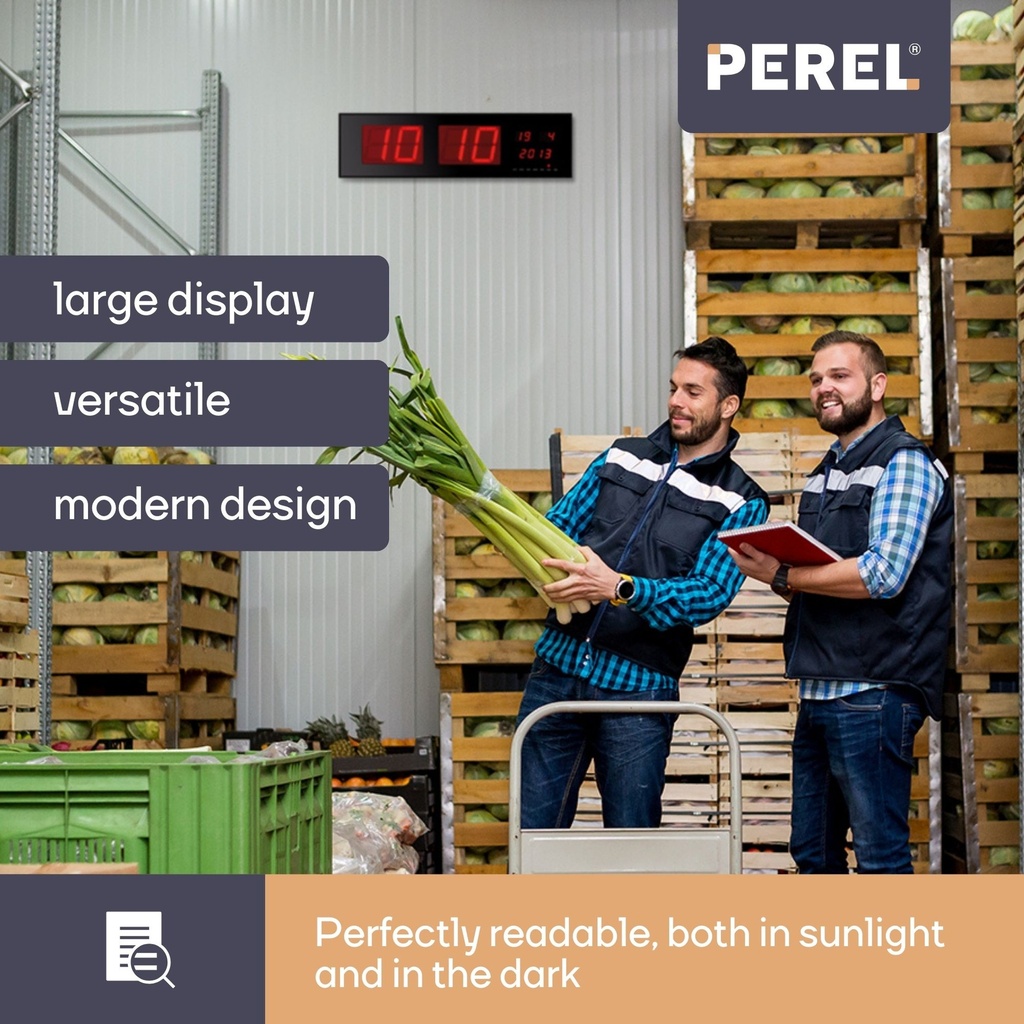
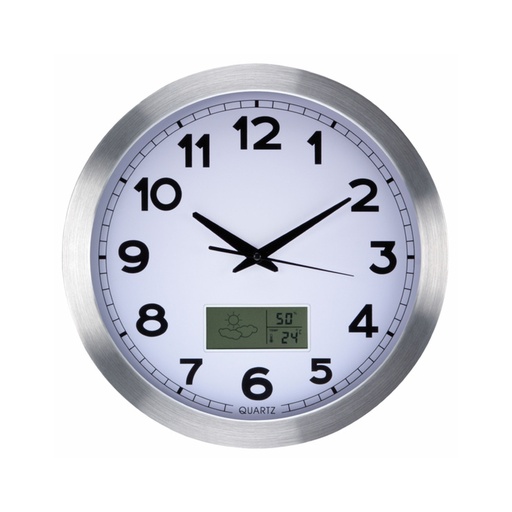
Choose a display that can be read from the normal viewing distance and angle. Compare digit or dial size, contrast, mounting and power supply. An illuminated digital display and a traditional analogue dial suit different lighting conditions and preferences.
A standard quartz mechanism keeps time from its internal oscillator and is set manually. A DCF mechanism can synchronise using the DCF radio time signal where reception is available. Building materials and placement can affect reception, so consider the installation location.
Often, provided the replacement fits. Compare the shaft length, dial thickness, mounting space and hand fittings. Hands and mechanisms are not universally interchangeable; choose replacement parts specified for the mechanism rather than relying on appearance alone.
Choose the version matching the language in which you want weekdays and calendar information displayed. The Dutch and French calendar clocks are separate versions. Translating the website does not change the physical language printed on the clock.
They are convenient for an everyday room overview. For measurements requiring specified accuracy, probe placement or logging, choose a dedicated instrument with suitable specifications. Select the clock primarily for readability and time display, then compare any additional environmental functions.