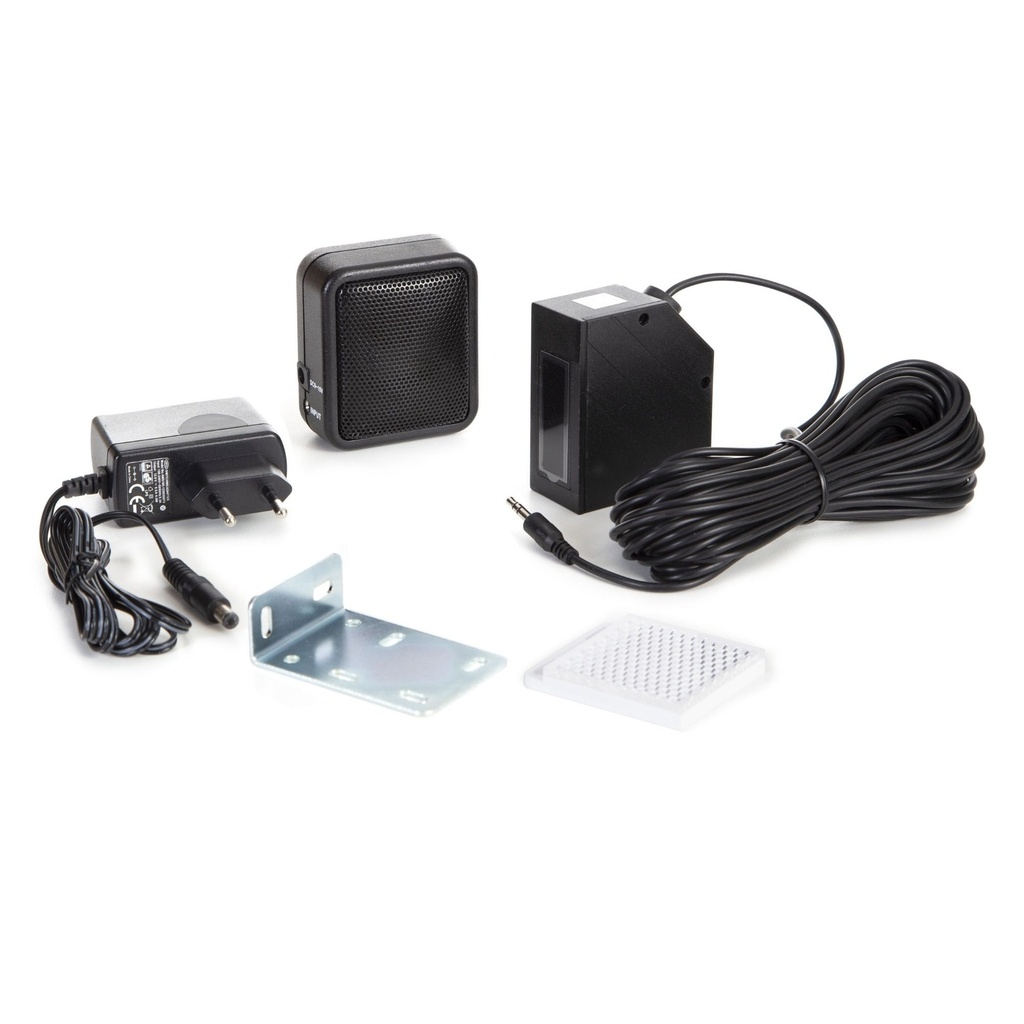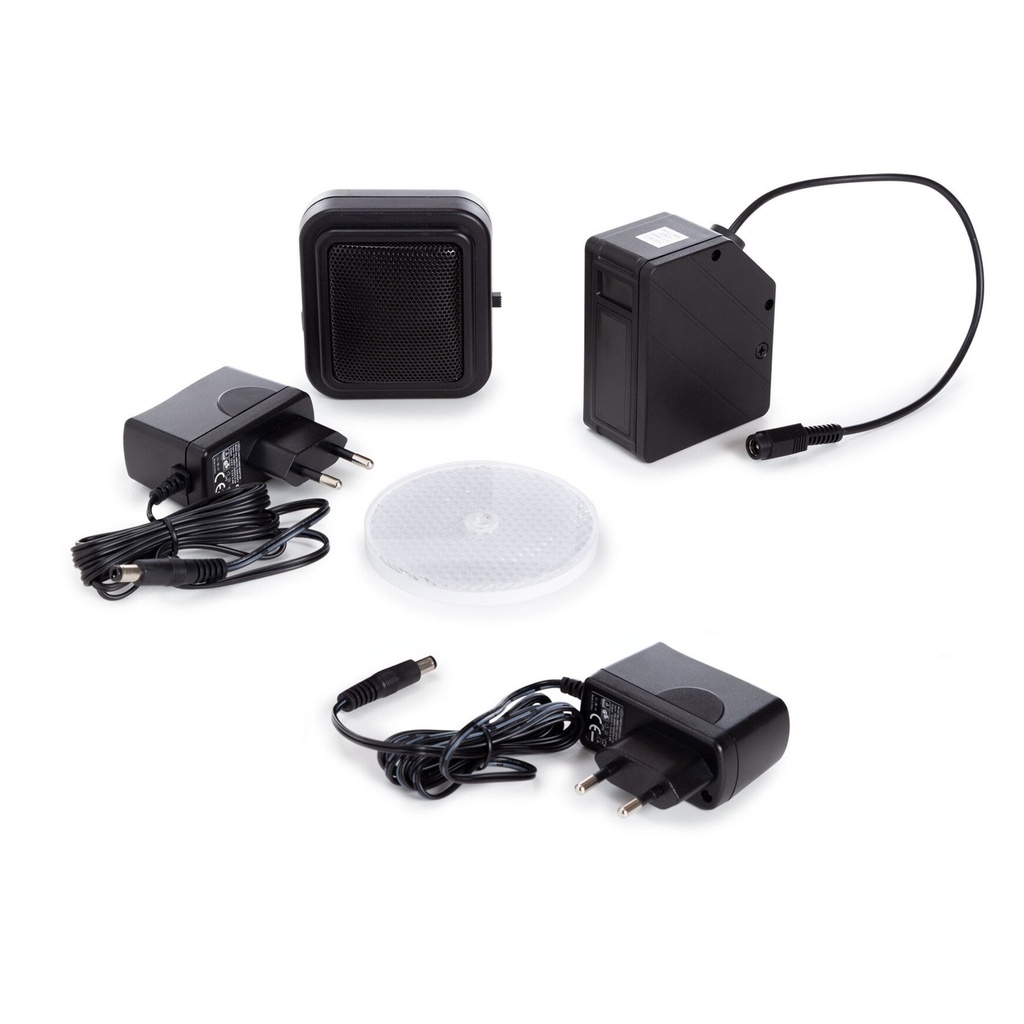

Hear when someone passes through an entrance with an infrared beam detector. The PEM7D and PEM7DW warning systems use a sensor and reflector to monitor a crossing point over distances up to 7 m. They respond when the light beam is broken, making them useful for shop doors and reception entrances.
These are beam-interruption systems: position the reflector opposite the sensor and keep their line of sight clear. Compare the wired PEM7D with the PEM7DW's wireless link to its alarm speaker, and plan power connections for the chosen arrangement.
Check the required separation, mounting height and chime or alarm settings before fitting. The manuals recommend indoor use because rain and condensation can affect operation. Align the sensor and reflector carefully, then test crossings at the installed position to confirm the warning is triggered where you need it.
A PIR sensor detects changes in infrared radiation within its field of view, typically from moving people. A beam detector responds when its beam is interrupted. Choose PIR for an area and a beam system for a defined crossing point or entrance.
Some detectors are designed to control lighting; others provide an alarm signal. Compare the supply voltage, output type and supported load, including the lighting technology. A sensor designed for a low-voltage alarm input is not interchangeable with a mains lighting switch.
Range describes distance; angle describes the width of the monitored field. Choose both to cover the intended approach without unnecessarily including adjacent areas. Mounting height, obstacles and the direction of movement can affect the practical coverage.
Consider the local audible alarm, power supply and mounting conditions. For phone notifications, also check the required Wi-Fi network and app. Choose the location according to the detector’s installation guidance, rather than wireless reception alone.
No. Some detectors include a buzzer or chime, while others need a connected controller or warning device. Distinguish complete alert products from sensors and accessories so you can plan the required power supply, signal connection and notification method.